📅 Visited: May 2024
A mountain appeared in the window of the propeller plane, out of nowhere.
We were supposed to be flying over open ocean, and yet here was a green mountain stretching up out of the blue sea, as if standing on tiptoe.
The Yakushima airport that came into view in front of it was so small I half-mistook it for a ferry terminal — and the mountains pressed in right behind the runway.
“Why is there a mountain this tall in the middle of the ocean?”
That question, which arrived just before landing, stayed lodged in my head for the entire two days.
First, what Yakushima actually is
Yakushima has a curious shape.
It’s almost perfectly round, roughly 130 km in circumference.
At its center stands Mt. Miyanoura (1,936 m), the highest peak in Kyushu — and the mountains rise straight up out of the coastline.
We changed planes in Kagoshima and crossed to the island on a small propeller plane.
That “mountain floating on the sea” we saw from the cabin turned out to be the key to every landscape we’d meet here.
Because granite solidifies slowly at depth, it forms a hard, coarse-grained rock with a rough, gritty texture.
That entire giant mass of rock was then pushed up to the surface over a very long span of time — and that, it's said, is how the island of Yakushima came to be.
In other words, Yakushima is a single block of granite shoved up out of the sea. That's why a tall mountain rises straight off the shoreline.
This one fact — granite — would go on to explain the forest, the waterfalls, the rivers, even the famous cedars we were about to walk among. I only realized that after the trip was over.
Shiratani Unsuikyo — moss, cedar, and a tree embracing rock
Before even dropping our bags at the hotel, we headed straight for the mountains.
From the road up to Shiratani, green-covered ridges stack and overlap into the distance.
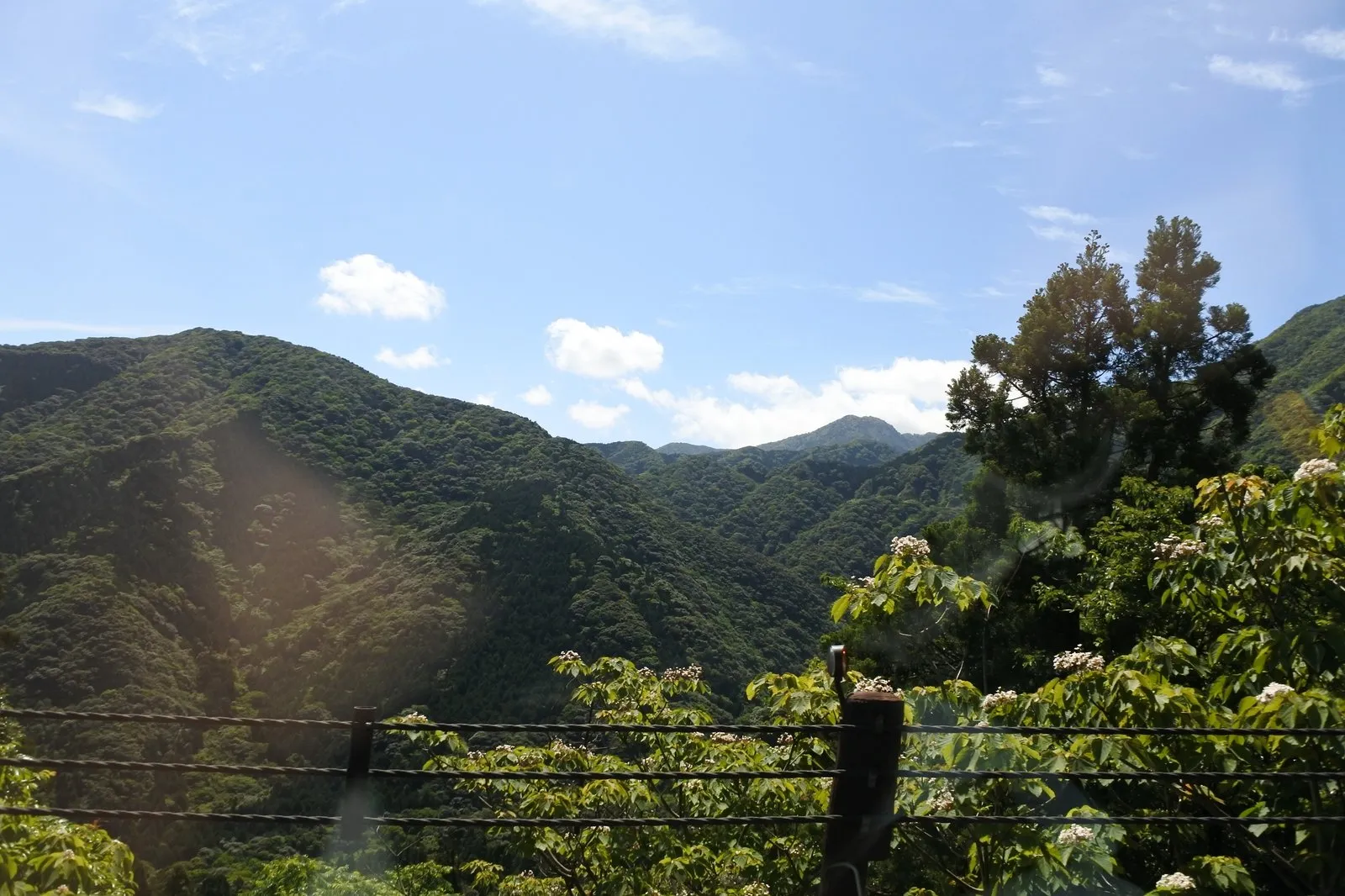
We walked the Yayoi-sugi Course — the shortest route, a little over an hour round trip to the Nidai-osugi cedar.
The air changed almost the moment we started walking.
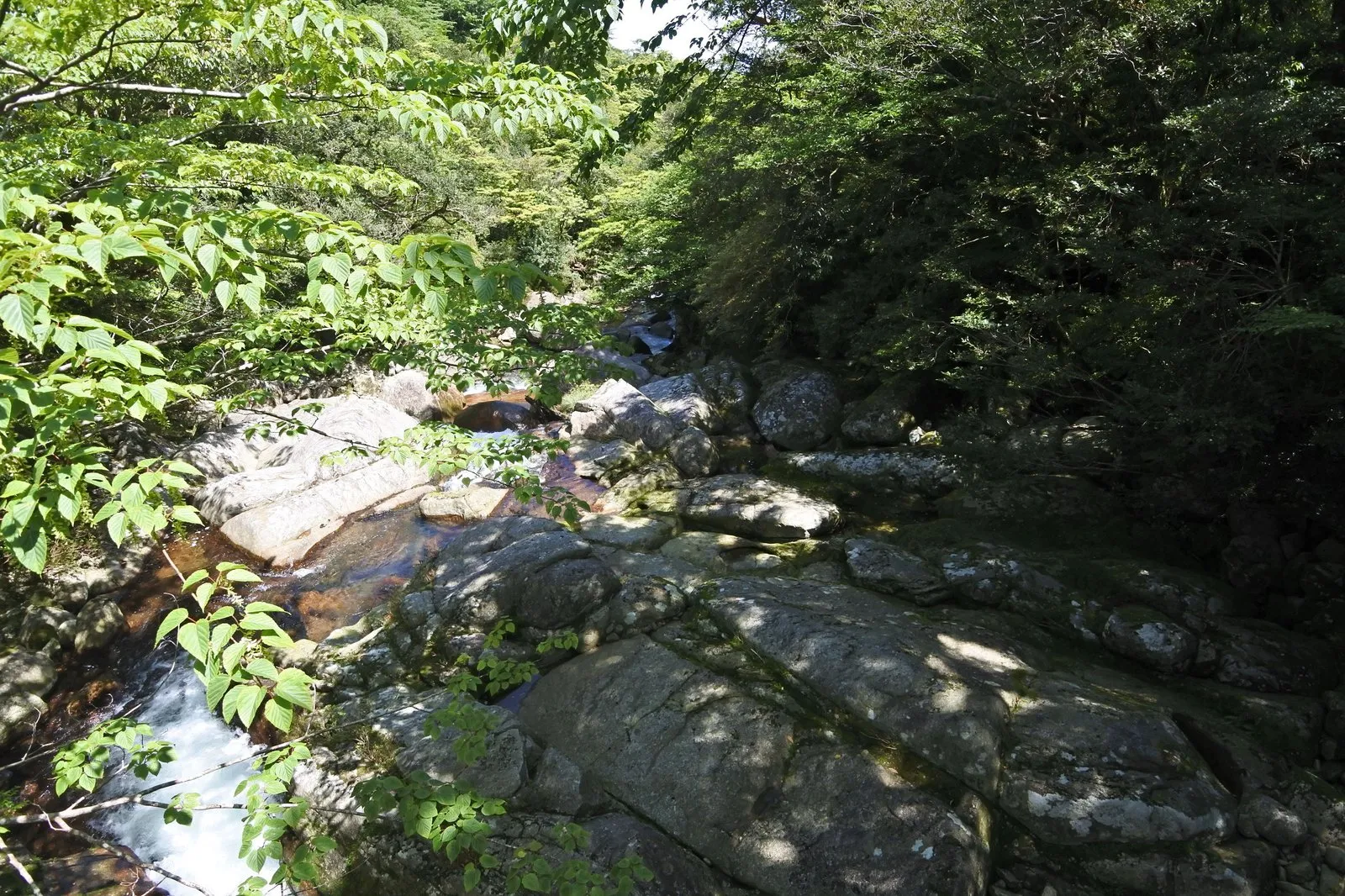
The ground, the rocks, the fallen trees — everything was wrapped in a thick layer of moss.
Small saplings poked up out of that moss, perched there like tiny visitors.
A stream ran along the other side of the path: in places it slid fast over the bare rock, in others it pooled into mirror-still basins.
One cedar along the way had thrown its roots over a huge boulder, gripping it tightly, and its trunk held a hollow (an “uro”) big enough for a person to step inside.
The Nidai-osugi is so thick you can’t see the top no matter how far you crane your neck.
Normally my wife and I chase rocks and water, but here it was the trees themselves that stopped us in our tracks.
The reason, again, is that mountain. A tall peak rising abruptly from the sea forces the moist ocean air upward.
As that air rises it cools, forms clouds, and drops rain. With a high wall (the mountain) standing right next to the ocean, clouds keep getting made.
This near-excessive rain is thought to be what wraps the island's rocks and trees in deep moss and feeds that dense forest.
Clear water flowing over granite was a sight we’d come to see again and again all over the island.
| Location | Miyanoura, Yakushima-cho, Kumage District, Kagoshima |
| Parking | Lot at the entrance (limited spaces) |
| Course | Yayoi-sugi Course is a little over an hour round trip — wear walkable shoes |
| Watch out for | It rains a lot — bring rain gear and non-slip footwear |
Il Mare — venison pizza and pasta
Down off the mountain, we were hungry.
We headed to Il Mare, an Italian place with counter seats facing the sea.
We ordered the “Cameron Special,” a pizza made with Yaku-deer venison, and a venison ragù pasta.
The pizza brought venison and gorgonzola together, with the crunch of almonds folded in.
The dough was chewy, and the crust came out crisp from the oven.
The pasta used a thick noodle with a firm bite, and the venison was lean and clean, with very little fat.
To be honest, I’d braced myself a little when I heard “venison.”
But there was no gaminess at all — just tender, mild meat.
The dining room was high-ceilinged and open. The food took a while to arrive, but waiting with the sea in view wasn’t a bad way to spend the time.
Deer caught on the island, turned into a proper plate of food — that, too, felt like part of how Yakushima lives today.
| Location | Yakushima-cho, Kumage District, Kagoshima |
| Signature | Yaku-deer venison pizza and venison ragù pasta |
| Note | Counter seats facing the sea; service can be on the slow side |
Crystal Cape — quartz glittering underfoot
Next we went looking for “Crystal Cape,” which I’d found in a corner of a guidebook.
The signage was so faint that we kept wondering whether the place really lay at the end of this path.
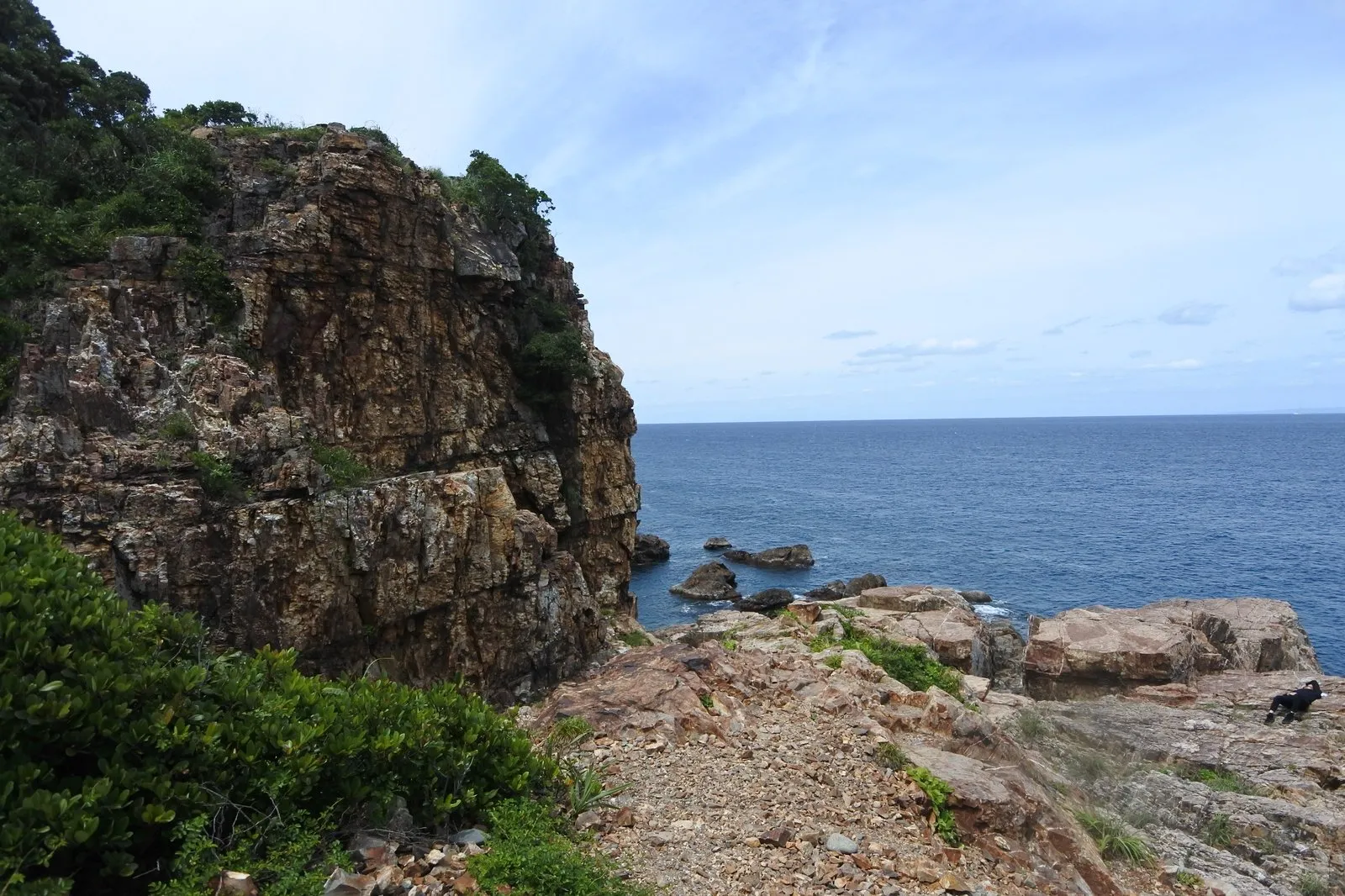
We pushed through the grass and — suddenly the view opened up.
In front of us, a shoreline of squared-off, broken rock piled together, and the blue sea spreading beyond it.
And then, our feet.
The stones lying on the ground were glinting white.
When I crouched and picked one up, clear grains caught the sun and sparkled.
That’s where the name “Crystal” comes from.
And the granite that makes up Yakushima is a rock that originally contained a great deal of quartz.
When granite weathers and breaks down, its other components turn into sand and clay — but the hard quartz grains keep their shape and remain.
This area is said to have once been mined for tungsten, used as a raw material for metal. The white glitter underfoot was the most immediate proof that this island is built of granite.
The cape’s squared rocks had broken along regular fracture lines (joints) — another distinctly granite-looking trait.
Out beyond, the island of Tanegashima lay flat on the horizon.
| Location | Yakushima-cho, Kumage District, Kagoshima (northeast of the island) |
| Watch out for | The entrance is hard to find; you push through grass. The rocks are slippery |
| Etiquette | Follow local signage on whether collecting stones is permitted |
Yakusugi Land — a natural theme park, and the secret of long life
We ended the day at Yakusugi Land.
The name sounds like an amusement park, but it’s a genuine old-growth forest.
We took the easiest route, the “Inishie-no-Mori (Ancient Forest) Course,” about 50 minutes.
Unlike Shiratani that morning, here the trails are well maintained and very easy to walk.
And yet the moment you step in, it turns cool, and giant trees appear one after another.
It really did make me want to call it a “natural theme park.”
We ran into monkeys along the way, and passed a corner where the aerial roots of a banyan tree hung down.
In the forest, a clear stream runs over white granite, crossed by a suspension bridge.
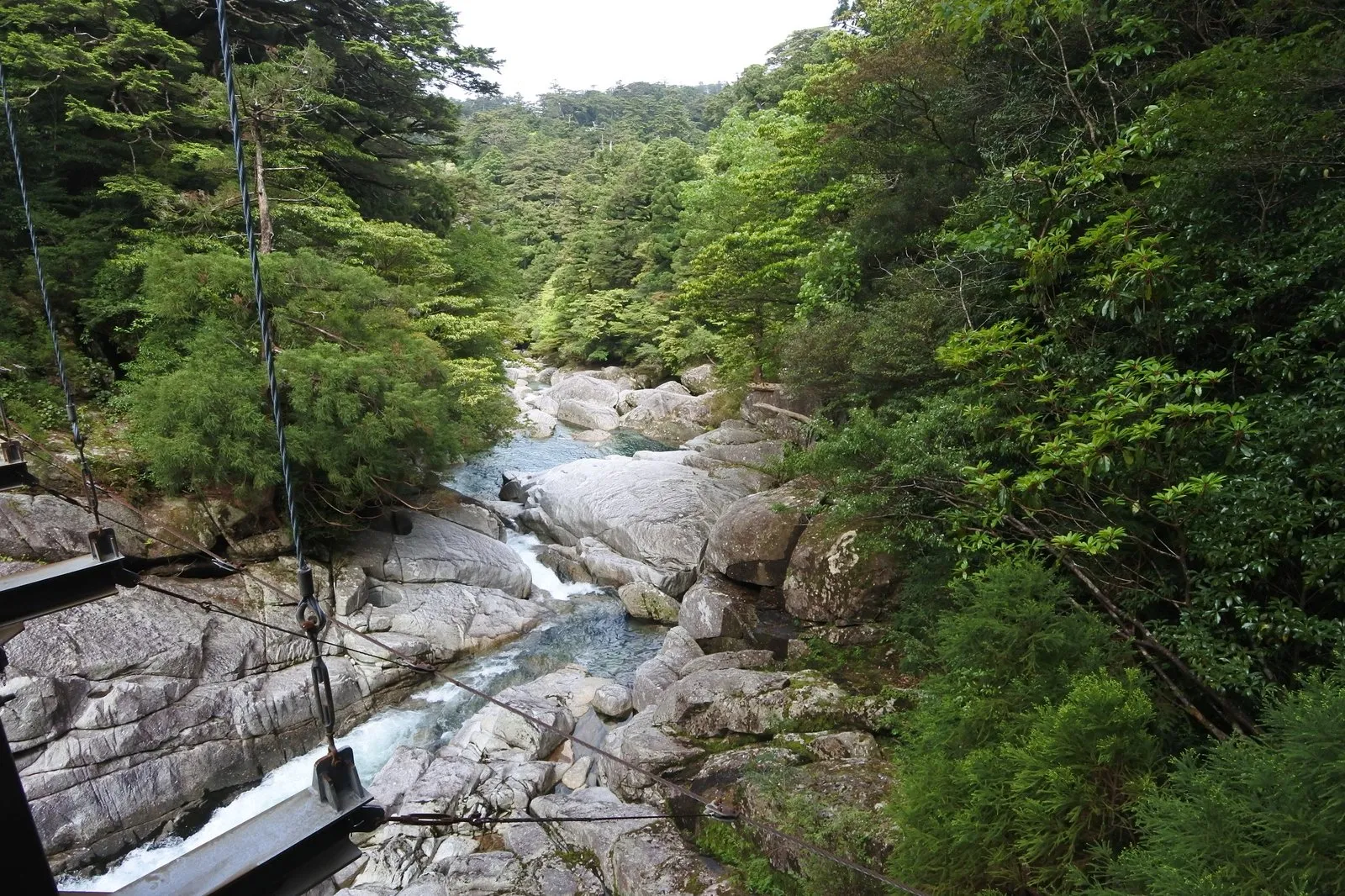
And here, the answer to something I’d been wondering about finally came into view.
Why do Yakushima’s cedars live for thousands of years?
The soil formed when granite weathers is thin and poor in nutrients.
With little to feed on, the cedars grow only slowly. Because they grow slowly, their growth rings pack in fine and dense.
Dense wood holds more resin, which makes it resistant to rot and to insects.
In other words, "soil that's hard to grow in" ends up producing "trees that resist rot and live a long time" — and that, it's said, is why Yakushima's cedars survive for thousands of years.
Poor soil that ends up prolonging life.
The idea that abundant nutrition isn’t always the right answer struck me as oddly fascinating.
| Location | Anbo, Yakushima-cho, Kumage District, Kagoshima |
| Parking | Lot at the entrance |
| Course | The Inishie-no-Mori Course (about 50 min) is well-paved and easy to walk |
| Note | It's cool up in the forest — a light layer is a good idea |
We also stopped at the lookout for Toroki Falls.
It’s an unusual waterfall that drops directly into the sea, and here too the view opens up suddenly once you push through the grass.
Samana Hotel and Sanpotei — a night between sea and mountain
That night we stayed at Samana Hotel Yakushima.
It had just been rebranded from the former Hotel Yakushima in late April 2024.
The room we were shown was large, new, and spotless.
It had a big sofa, and a location with views of both the sea and the mountains.
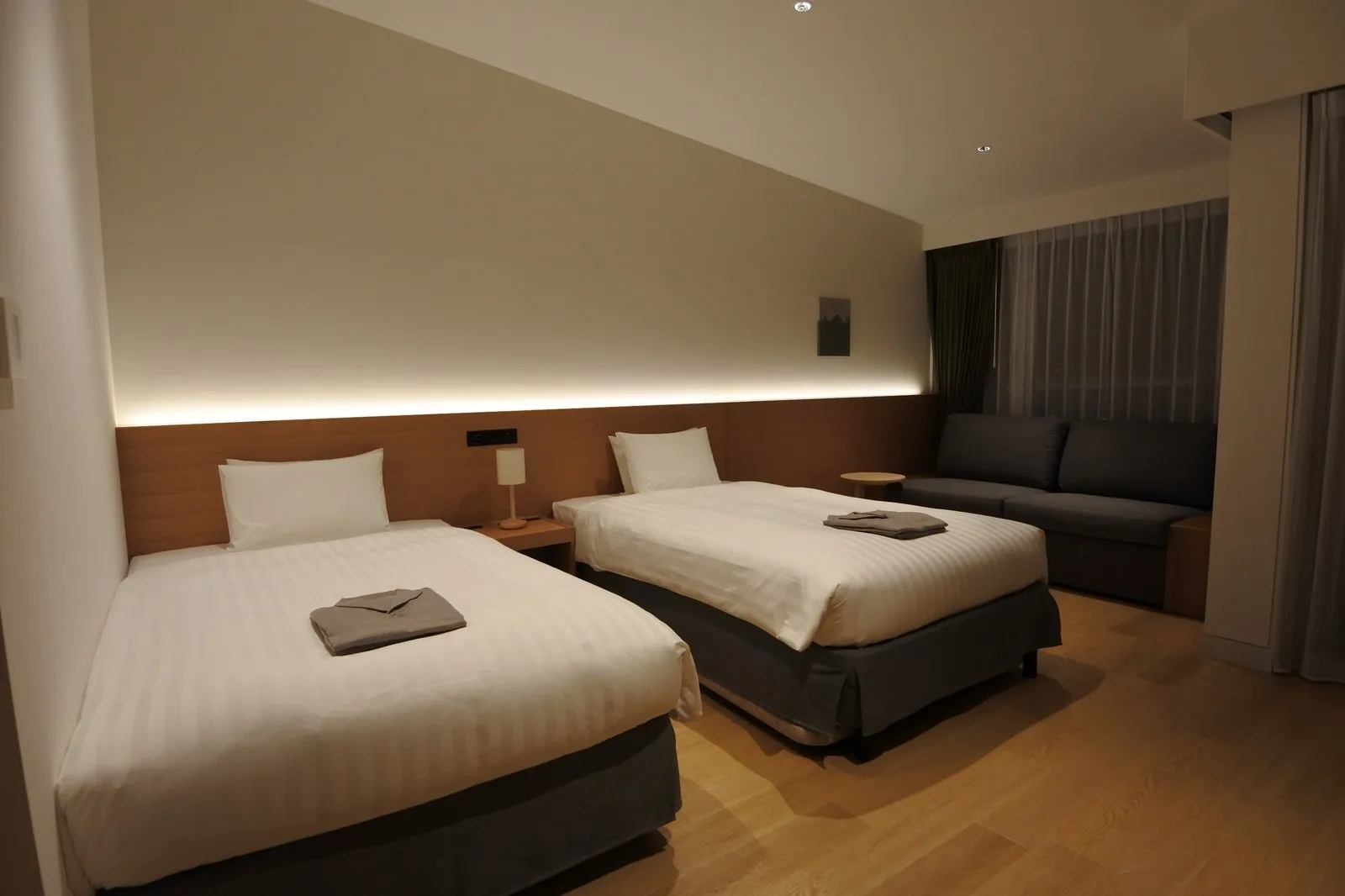
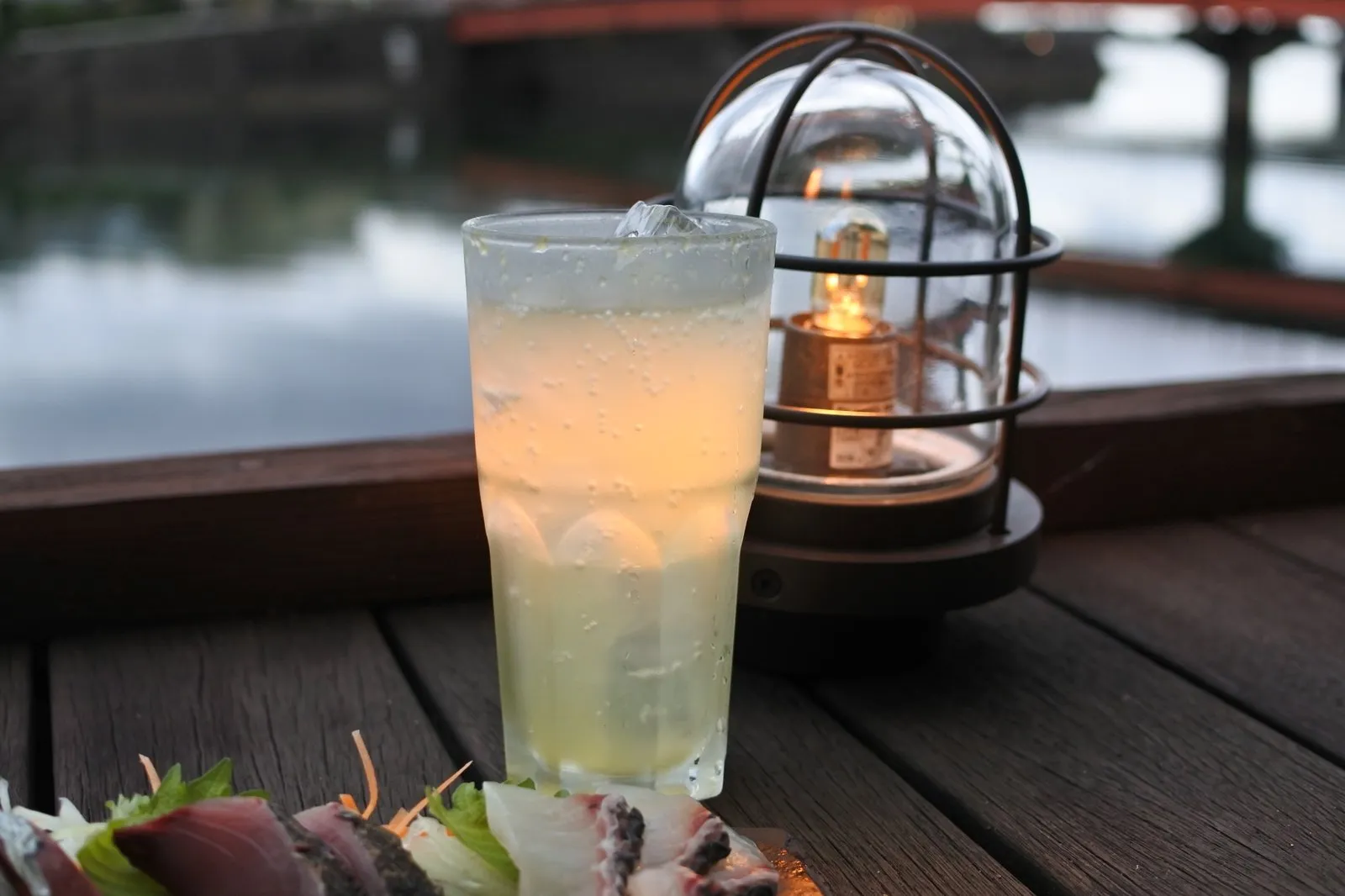
For dinner we went to the terrace of nearby “Sanpotei.”
Mercifully the rain stayed light, there were few bugs, and the lantern-lit table made for a pleasant evening.
The sashimi platter held kubiore-saba (a local mackerel), suma bonito, and lightly blanched mejina (largescale blackfish).
A Yakushima enzyme squash drink went down with a clean, light sweetness.
What stayed with me most was the smoked flying fish.
Wrapped in smoke, with just the right amount of moisture and any fishiness drawn off, it concentrated all its savory flavor.
“This is the fish version of bacon,” my wife and I agreed.
Back at the hotel, we brewed coffee in the room and relaxed with bread and snacks we’d bought earlier.
The large communal bath is said to have a sea view, but it was night, so it was too dark to see.
Even so, a quiet night cradled between sea and mountain was more than luxury enough.
| Location | Yakushima-cho, Kumage District, Kagoshima |
| Features | Rebranded in late April 2024; views of both sea and mountains |
| Dinner | We used the terrace at nearby "Sanpotei" (smoked flying fish is the specialty) |
Morning of day two — a breakfast that beat all expectations
The next morning’s breakfast went far beyond anything I’d imagined.
Ponkan jam and tankan juice, pumpkin soup, cheeses including caciocavallo.
Chicken-and-potato (the chicken was excellent), flying-fish satsuma-age fish cakes, a quiche, and scrambled eggs rich with dashi.
The waffle was crisp-and-fluffy, close to a Manneken, and the pancake was soft and pillowy, served with vanilla ice cream.
The standout was a bowl of house-made granola over thick, barely-tart yogurt.
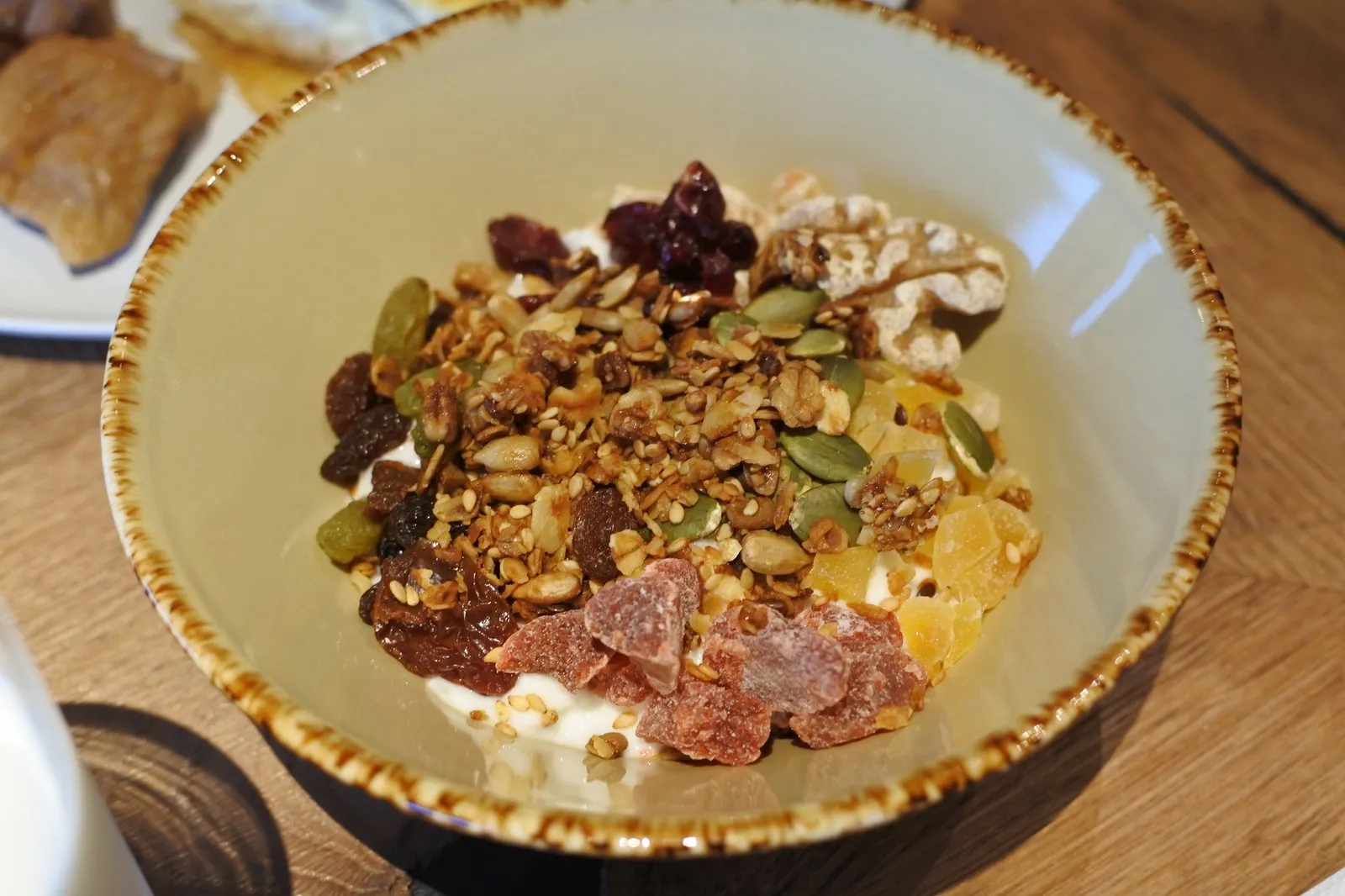
Miso-simmered mackerel, comb honey, Yakushima black tea, even the rice — none of it let our chopsticks rest.
The tableware was by “ARAS,” which felt high-end yet was astonishingly light.
Honestly, my wife and I said it out loud: “I wouldn’t be surprised if this price doubled next year.” That’s how satisfying the stay was.
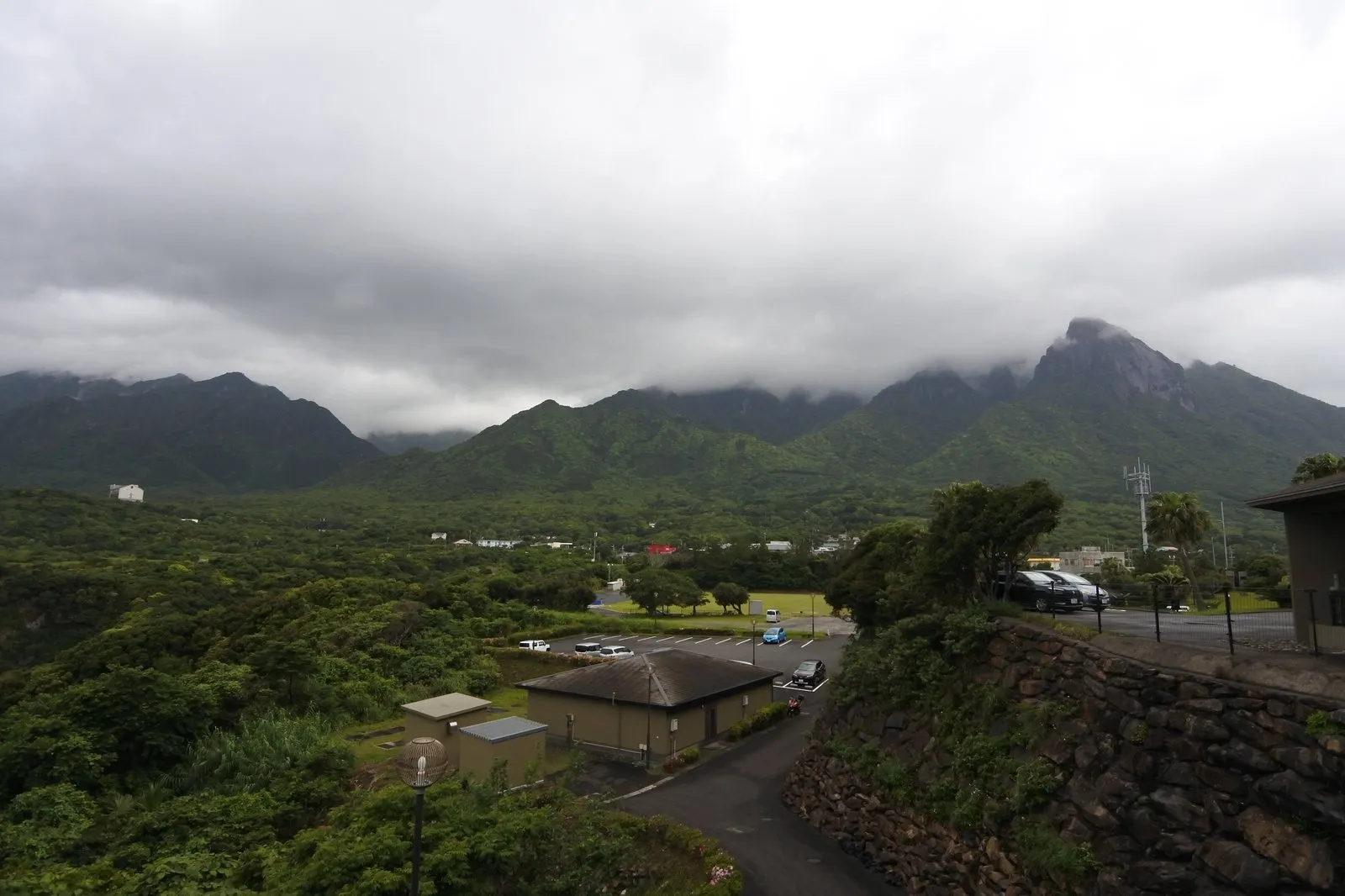
After eating, we stepped outside on the second floor and looked out over the mountain ridges — Mt. Mocchomu among them — the village below, and the sea beyond it all, opening up wide.
The coastal cliffs — seeing what surrounds the granite
After checkout, we drove south along the coast.
Along the way we got out near a monument marking where the priest Sidotti once came ashore.
Rounding behind the monument, we found a cliff face layered toward the sea.
It was rock, but the strange banded pattern made it look at once like tree rings, like charcoal, and like cut building stone.
Sheets of rock had peeled up here and there, and each time a wave crashed in — “kaboom” — the sound echoed back from the rock itself.
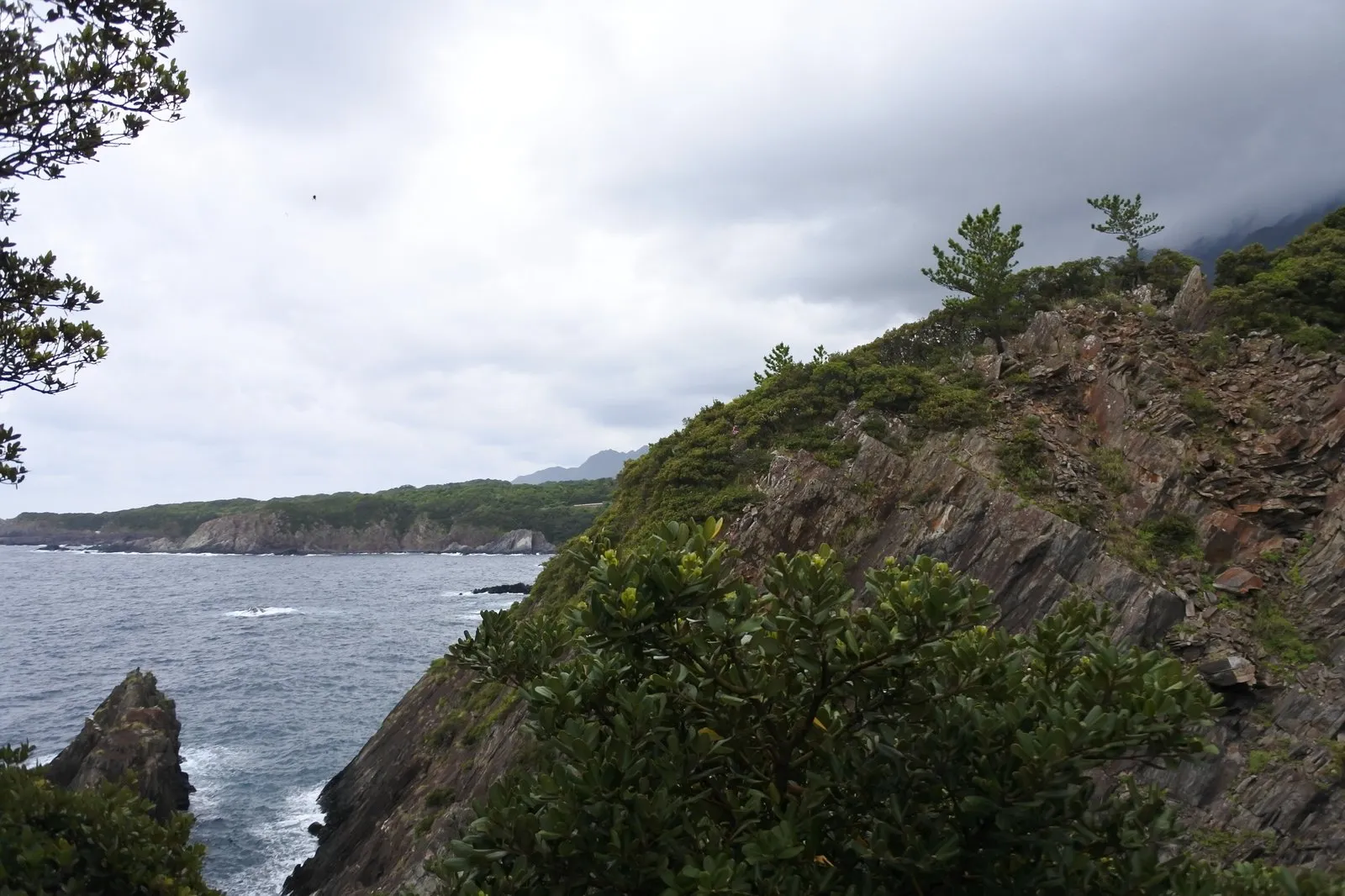
But this cliff shows clear layers (bands).
This is thought to be old strata — sedimentary rock and the like — that surrounded the granite before it solidified underground.
Sand and mud piled up in layer after layer on the sea floor and hardened, and later movements of the earth tilted them, so the layers now appear to run at an angle.
A single sheet of granite at the island's core, older strata around its rim — on the same island, the face of the rock looked completely different depending on where you stood.
| Location | Yakushima-cho, Kumage District, Kagoshima (along the southeast coast) |
| Highlight | The tilted, layered cliff and peeled-up sheets of rock |
| Watch out for | The water's edge is slippery — mind the waves |
Senpiro Falls — water sliding down one giant slab of rock
The climax of this trip was right here.
Senpiro Falls.
It’s the waterfall featured on NHK’s Bura Tamori.
The trail to the viewpoint was genuinely tough — big steps on the stairs — and with the previous day’s hiking still in our legs, we arrived utterly spent.
But the moment we stepped onto the viewing platform, the exhaustion vanished.
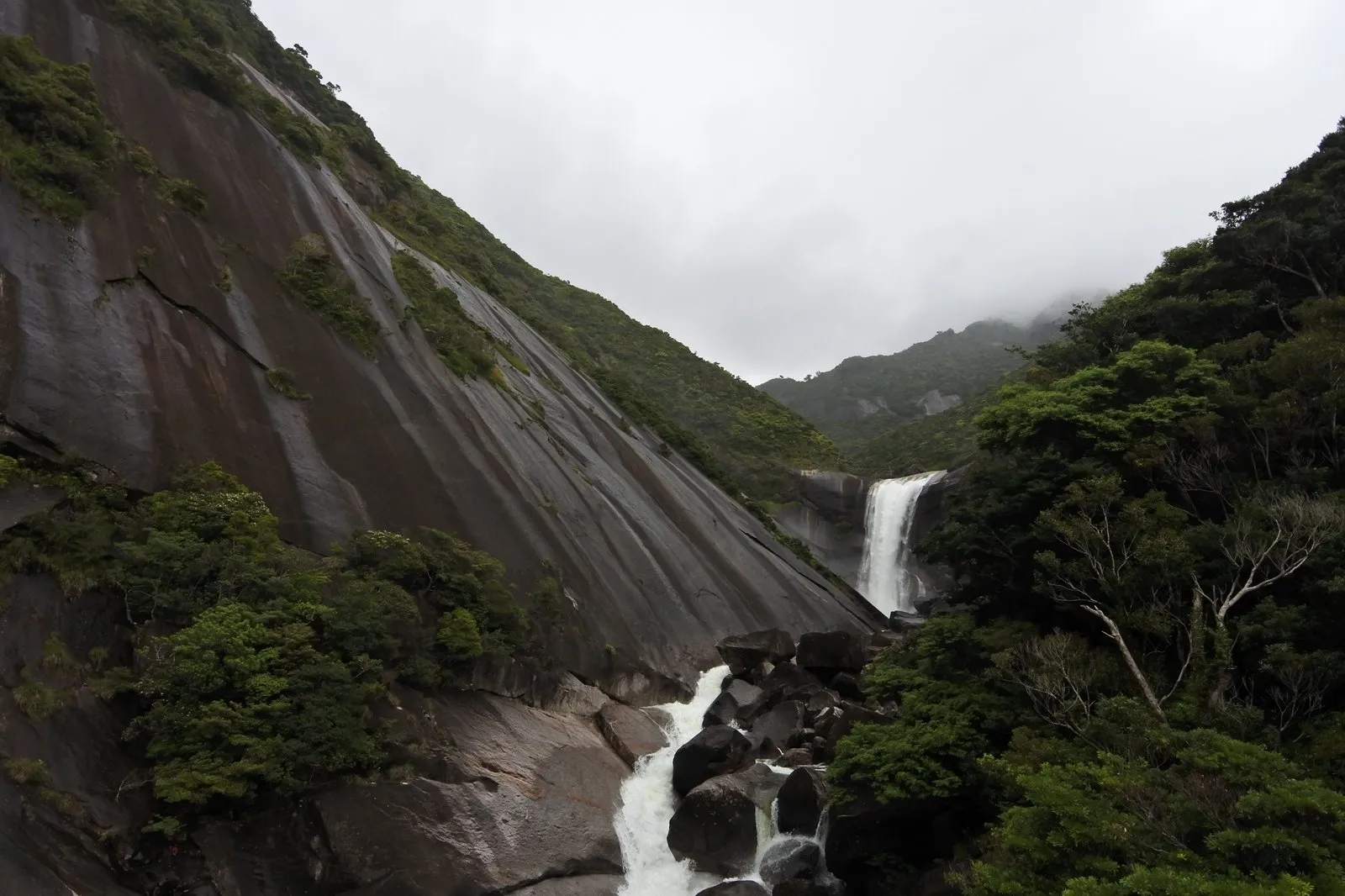
Before the waterfall itself, what seized my eyes was the left side of the falls.
An enormous, black, glassy rock face rises diagonally, like a single sheet, looming up at an angle.
From a distance it really looks like a sheet of cloth or a panel of metal.
Up close, it was unmistakably rock.
The water poured fast across that rock, and the leaping spray rose upward like smoke.
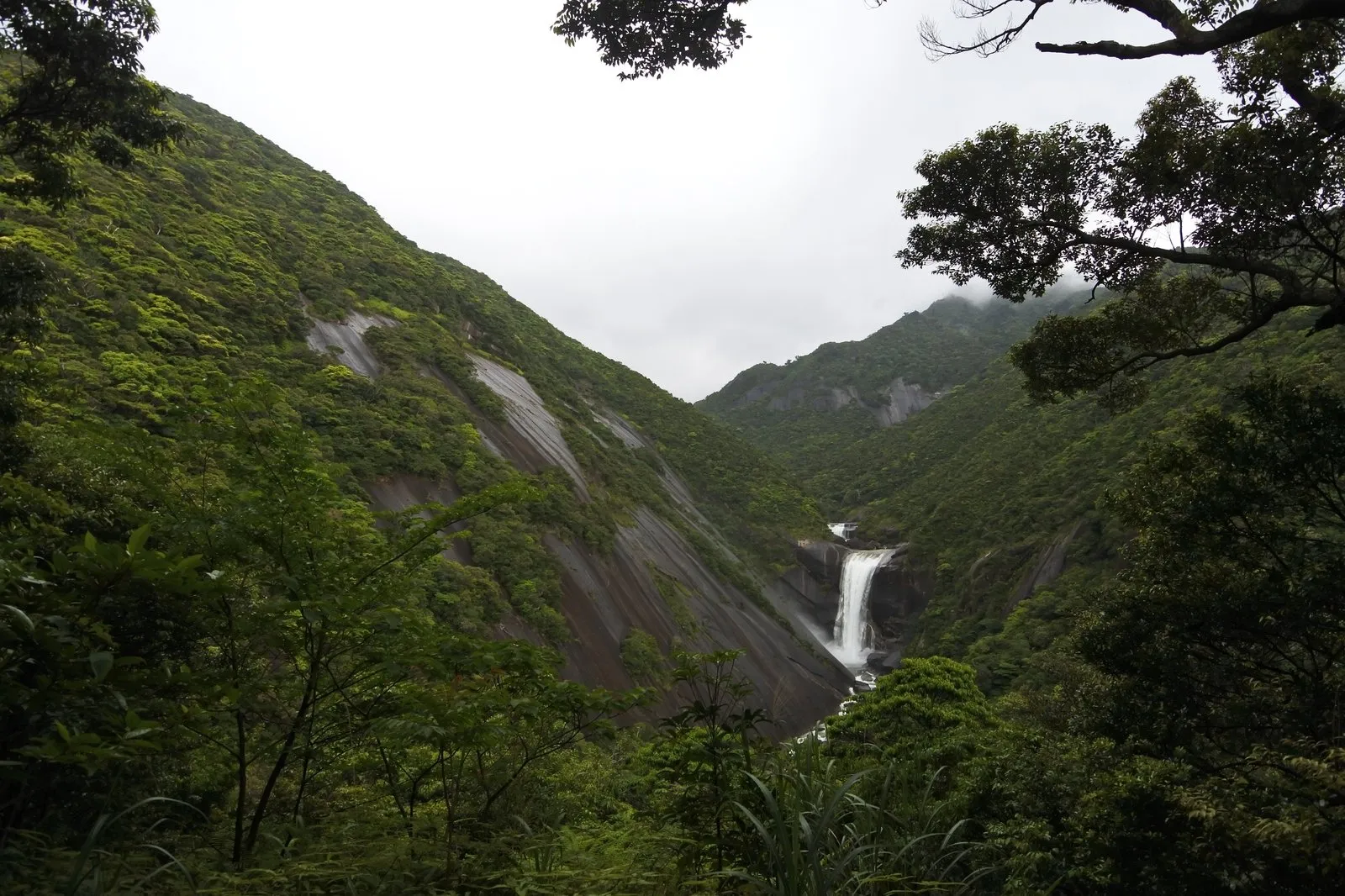
The core of Yakushima is, to begin with, one giant mass of granite.
Because granite isn't divided into layers, even when it's worn down it produces no bands or steps — it forms a smooth, single-slab landform.
When water flows over it, the river can't gouge deeply into the rock; instead it slides across the surface like a sheet.
That strange way the falls flow was the largest piece of evidence that the whole island is made of a single sheet of granite.
This was the moment the opening idea — “the island is one block of granite” — appeared right in front of me as a giant rock face.
| Location | Hara, Yakushima-cho, Kumage District, Kagoshima |
| Parking | Lot just before the viewpoint |
| Watch out for | The trail to the platform has lots of stairs and is tough — keep some energy in reserve |
After this, waterfalls turned up all over the island, and every time we pulled over, the sound and force took us by surprise.
Ryujin Falls, which we happened to stop at, roared the moment we stepped out of the car, while Oko Falls split into two streams as it dropped, sheer power. Nunobiki Falls turned the air cool just a few steps in from the entrance, and at the banyan trees of Nakama and the banyan park of Shitogo, we stood and stared at the way the trees twined together in three dimensions.
Yokogawa Gorge — white, round, glassy rocks
The last place we headed for was Yokogawa Gorge.
The entrance was dense jungle, pure and simple.
We came out of a green tunnel where we couldn’t even see our feet — and suddenly into a bright waterway.
The scene that spread out there made us cry out without meaning to.
The rocks are white.
And they’re round, polished glassy-smooth.
Big rocks and small, all with their corners worn off and rounded, with clear water running between them.
The water was deep, yet you could see straight down to the bottom.
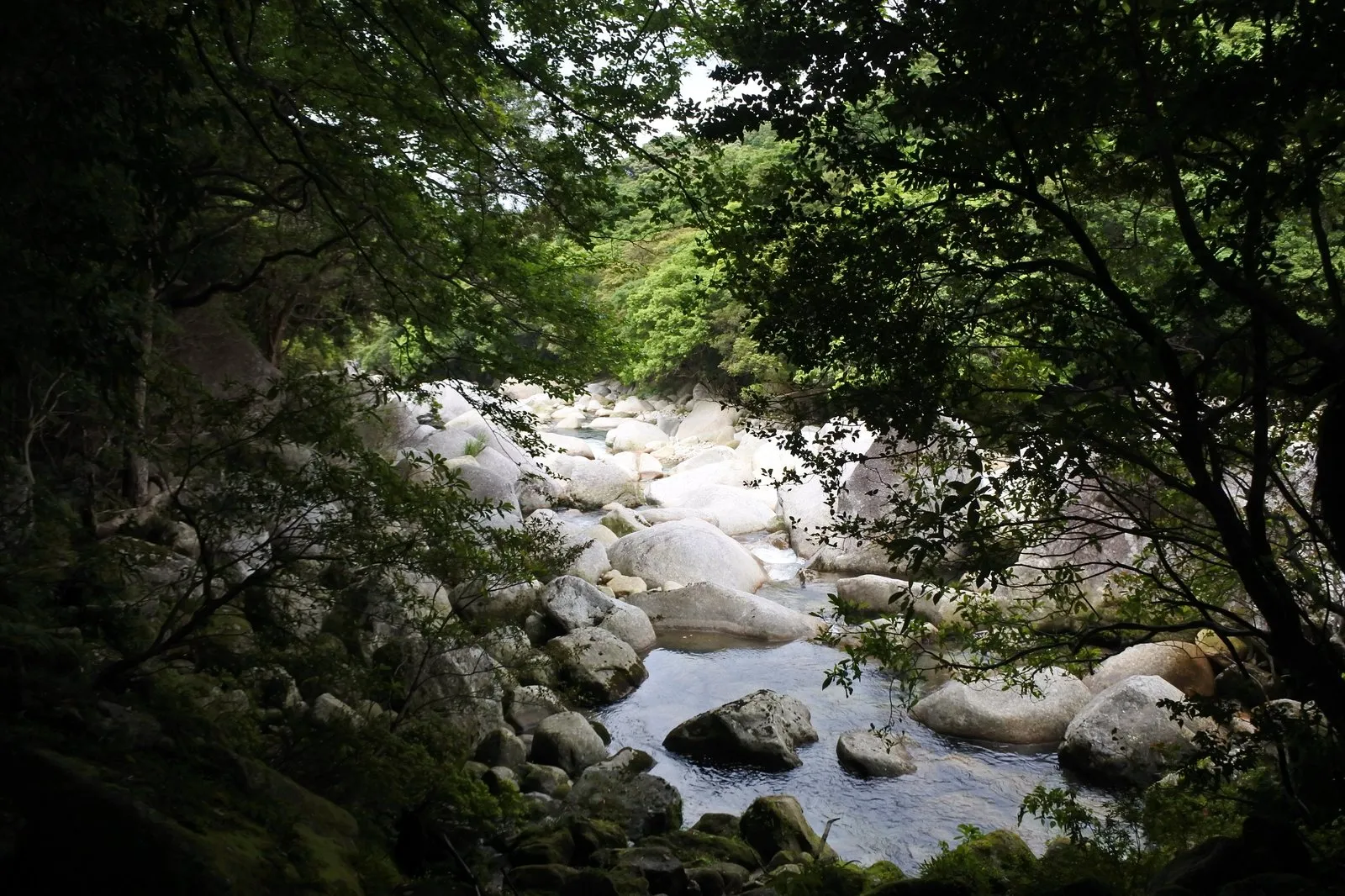
Precisely because we’d seen granite all over the island by now, these white round rocks moved us in a special way.
White, rounded rock was something we saw here for the very first time on Yakushima.
Because granite contains a lot of pale minerals like quartz and feldspar, when its surface is worn and polished by river water, the whiteness inside emerges.
And by being tumbled and polished by flowing water over a very long time, the corners come off and it grows round and smooth.
In other words, these white, rounded boulders were a landscape that the two leads of Yakushima — "granite" and "abundant water" — built together over a vast stretch of time.
| Location | Yoshida, Yakushima-cho, Kumage District, Kagoshima (northwest of the island) |
| Watch out for | The entrance path is densely overgrown; the rocks are slippery, and the gorge is dangerous when the water is high |
| Highlight | White, round granite boulders and exceptionally clear water |
Leaving Yakushima
The weather on the way home was bad, and there was real doubt about whether the flight from Yakushima to Kagoshima would even take off.
It lifted off a little late, and when we just barely made our connection, both of us let out a sigh of relief.
(As an aside: once you clear security at Yakushima airport, there are no restrooms. Anyone heading there, be warned.)
Two days, one night.
In just those two days, we got to taste this island’s sea, mountains, rivers, waterfalls, forest — and even its food — all in one concentrated dose.
What surprised me looking back was that the moss of Shiratani, the single slab at Senpiro Falls, the white round rocks of Yokogawa, the long life of the Yakushima cedars —
at the root of every one of them lay the same answer: “one island of granite.”
If all you want is to photograph the views, you don’t really need to know any of this.
But the moment I realized the rock underfoot was connected somewhere to all the rest, the entire island started to look like a single story.
Mt. Miyanoura, which we never got to walk, and the Jomon-sugi cedar are both still waiting.
Next time, I’d like to build up a little more stamina and come back, deeper into this island of granite.
Geological references: Geological Survey of Japan, AIST ("Geology Map Navi"); Geospatial Information Authority of Japan topographic maps. Statements written as "is thought to" or "is said to" reflect prevailing interpretation rather than settled fact.