📅 Visited: November 2024
Out at sea, the waves were crashing white.
But on our side of the rocks, the water was strangely calm.
It was clear enough to see straight to the bottom.
A row of pointed rocks stood in the sea, lined up in a single straight line.
And that line was holding back the waves, like a breakwater.
How did rocks end up arranged like this?
Over the next two days, we ended up looking at a lot of rocks.
A single slab of stone so big you have to crane your neck. A cliff covered in holes. A waterfall dropping down a rock face.
They all seemed unrelated. It was only toward the end of the trip that we learned they were connected by a single thread.
A stalled express, and a rare tuna cutlet
We took a limited express train to Kushimoto, near the southern tip of Wakayama Prefecture.
The train was painted with pandas.
Partway there, though, there was an accident on the line, and the train stopped.
We ended up about an hour and twenty minutes late.
We passed the time with snacks and games.
At Kushimoto Station we picked up a rental car, and the first order of business was lunch.
The place we’d been hoping for, a restaurant known for bonito ochazuke (rice in tea broth), was temporarily closed for renovation.
So we went to Restaurant Kukai instead.
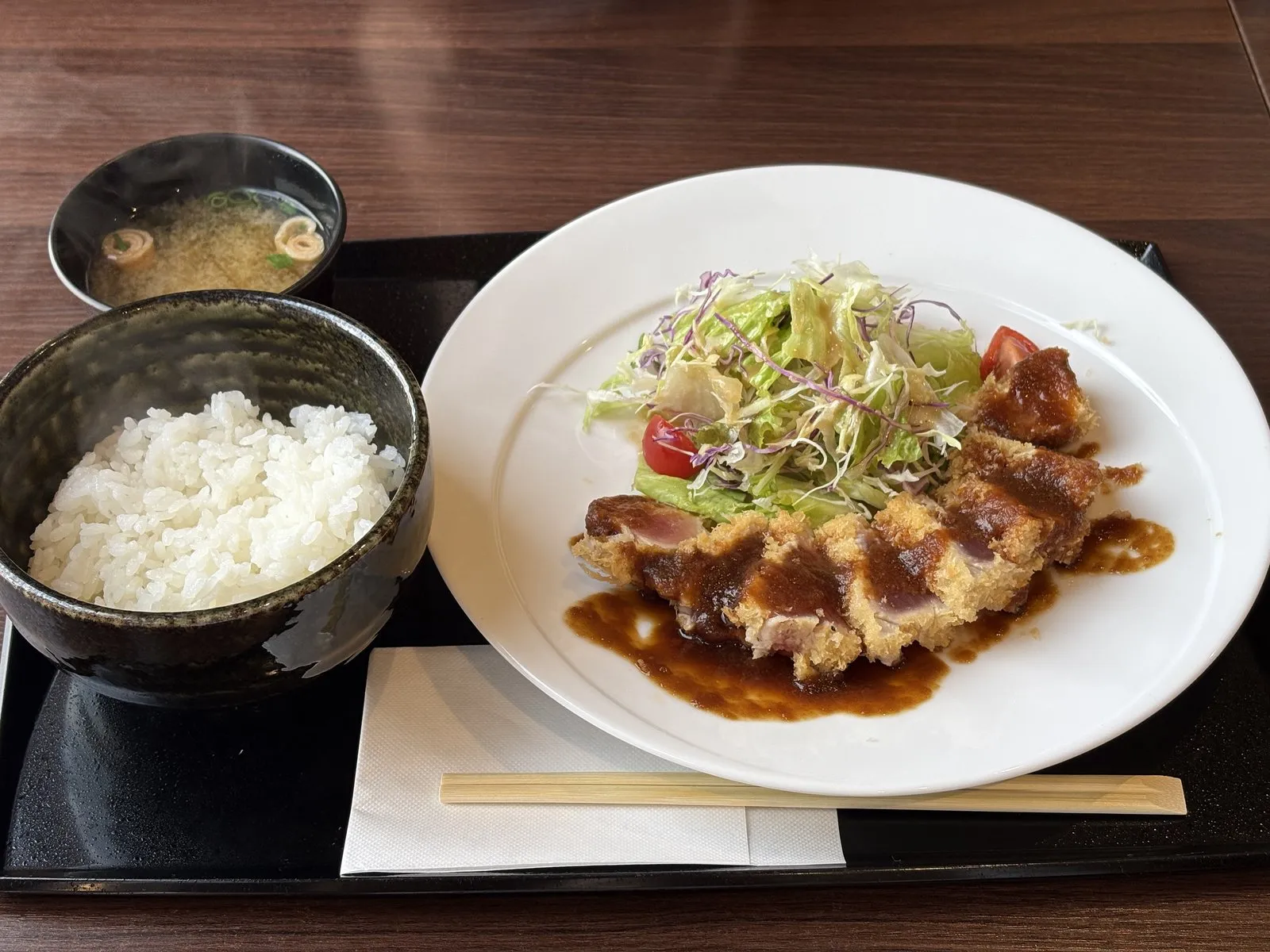
The rare tuna cutlet set, 1,700 yen.
It was fluffy.
The breading was crisp, and the tuna inside was so soft it just melted away.
The sauce was good too. It might even be easier to enjoy than plain sashimi.
It’s the kind of dish where you want to say, “If you come here, order this.”
My wife found the sauce a little on the salty side.
The other thing we ordered, a seafood bowl with three toppings (1,800 yen), was honestly a letdown.
Lean tuna, medium-fatty tuna, and Wakayama whitebait over rice — but the rice wasn’t seasoned sushi rice, and both the whitebait and the lean tuna were dry and crumbly.
At this restaurant, the tuna cutlet seems to be the right call.
| Location | Kujinogawa, Kushimoto, Higashimuro District, Wakayama |
| What we ate | Rare tuna cutlet set 1,700 yen, three-topping seafood bowl 1,800 yen (at the time of our visit) |
Hashigui-iwa — a line of rocks in the sea
And so, to the rocks from the opening: Hashigui-iwa, the “bridge-pillar rocks.”
We parked at Michi-no-Eki Kushimoto Hashigui-iwa, a roadside rest station, and there they were, right in front of us.
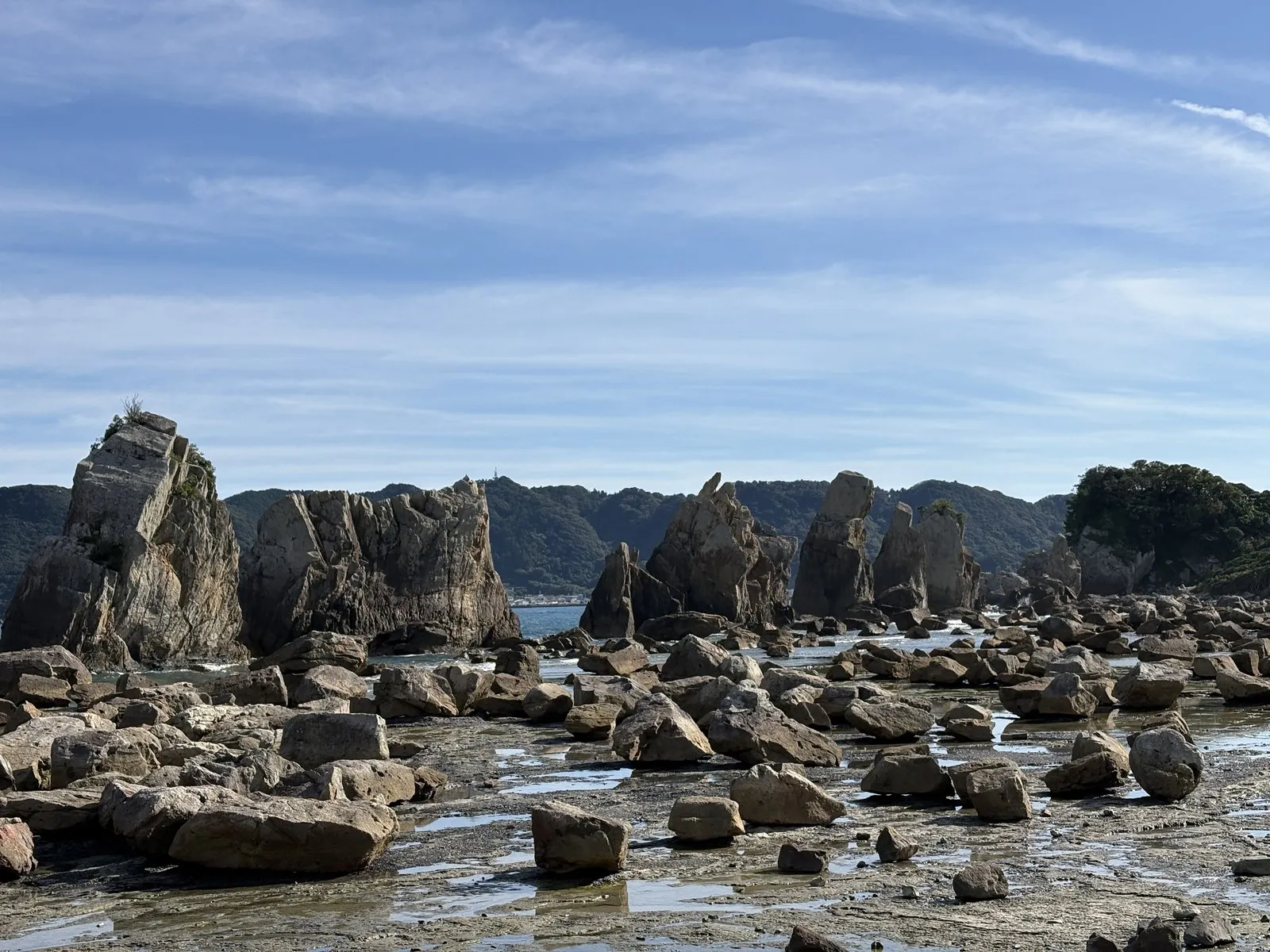
“Wow,” I said out loud.
It was low tide, and a rocky shore strewn with boulders had appeared in the foreground.
Behind it, pointed rocks stood in a row like the pillars of a bridge — which is exactly where the name comes from.
On the outside of the line the waves were rough, but on the inside the water was calm, clear, and beautiful.
It’s more a place for looking than for walking around.
That was a small disappointment, but I was still glad we came.
Originally there was a layer of mudstone here — mud that had hardened into rock. Magma is thought to have forced its way into a crack in that mudstone and solidified. A sheet of rock formed this way is called a dike.
Later, the softer mudstone around it was worn away by the waves, and only the harder, once-molten rock is said to have been left standing, like a row of pillars.
Because the rock solidified along a single crack, it runs in a straight line. Some 40 rocks, large and small, are said to stretch for about 850 m.
The boulders scattered over the shore in front are thought to have been carried there by great tsunamis in the past.
After Hashigui-iwa, we stopped at the Hashigui branch of Usukawa Manju Gihei, a shop selling thin-skinned sweet buns.
The dough is thin but airy, and packed with smooth red bean paste.
The skin has a glossy sheen, a bit like the surface of a steamed pork bun.
The bean paste felt carefully made.


On this one, the two of us disagreed.
| Location | Kujinogawa, Kushimoto, Higashimuro District, Wakayama |
| Parking | Use the roadside station's parking lot |
| Highlight | The line of rocks and the calm water inside it. At low tide, a boulder-strewn shore appears |
Shionomisaki Tower — nothing but ocean
Next, Cape Shionomisaki, the southernmost point of Honshu, Japan’s main island.
We went up the Shionomisaki Observation Tower.
Admission was 300 yen per person.
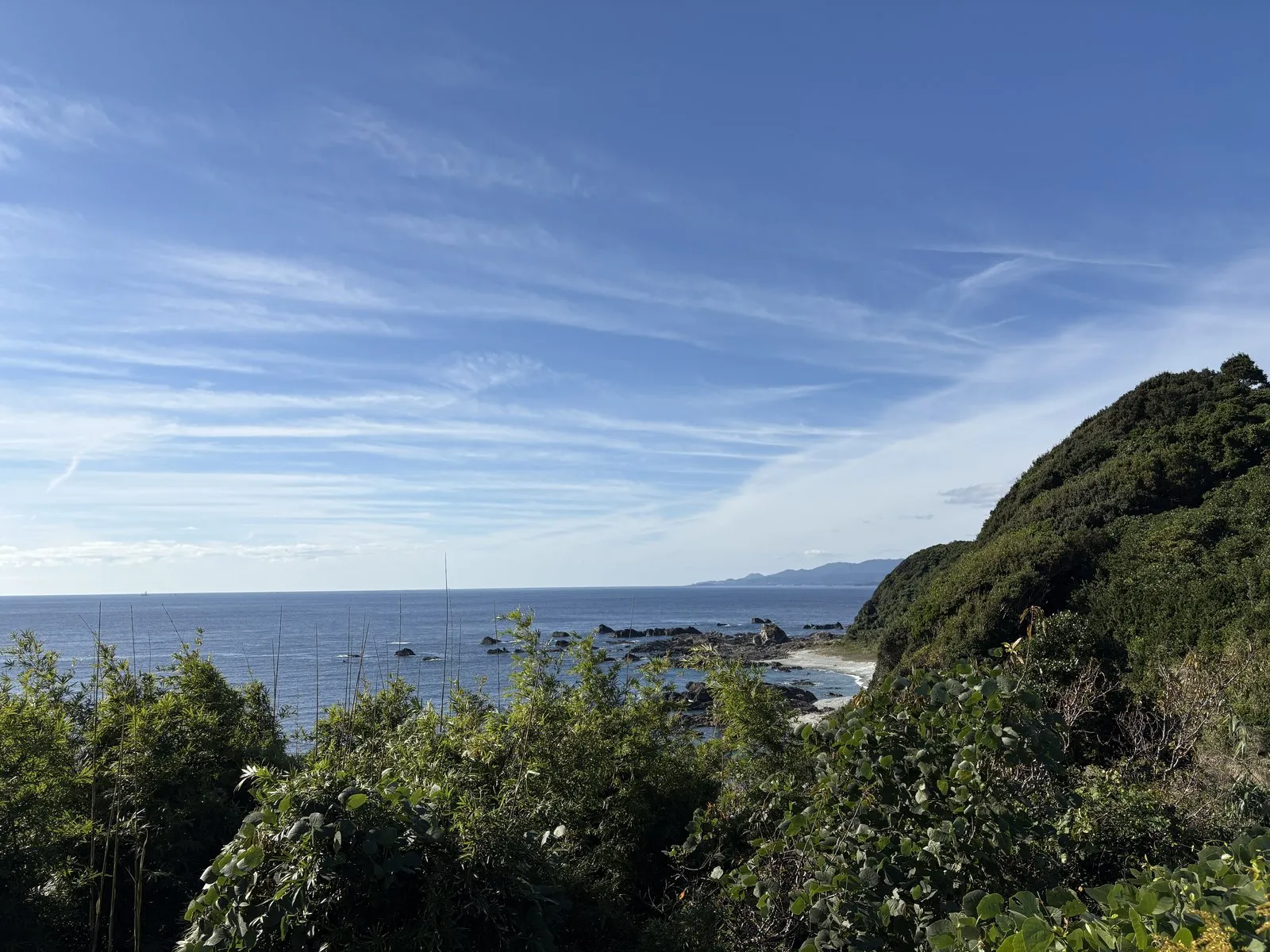
Ocean.
Nothing but ocean.
The horizon looked curved.
That said, by this point we’d started saying that each stop felt a bit brief.
You look, you say “huh, nice,” and you move on.
That’s how the day had been going.
The next place turned that impression completely on its head.
| Location | Shionomisaki, Kushimoto, Higashimuro District, Wakayama |
| Admission | 300 yen per person (at the time of our visit) |
| Highlight | The Pacific from the southern tip of Honshu, with a visibly curved horizon |
Kozagawa’s Ichimaiiwa — photos can’t show how big this is
We left the coast and followed the Koza River (Kozagawa) upstream.
At Michi-no-Eki Ichimaiiwa Monolith, we got out of the car.
My first thought was simply: that is enormous.
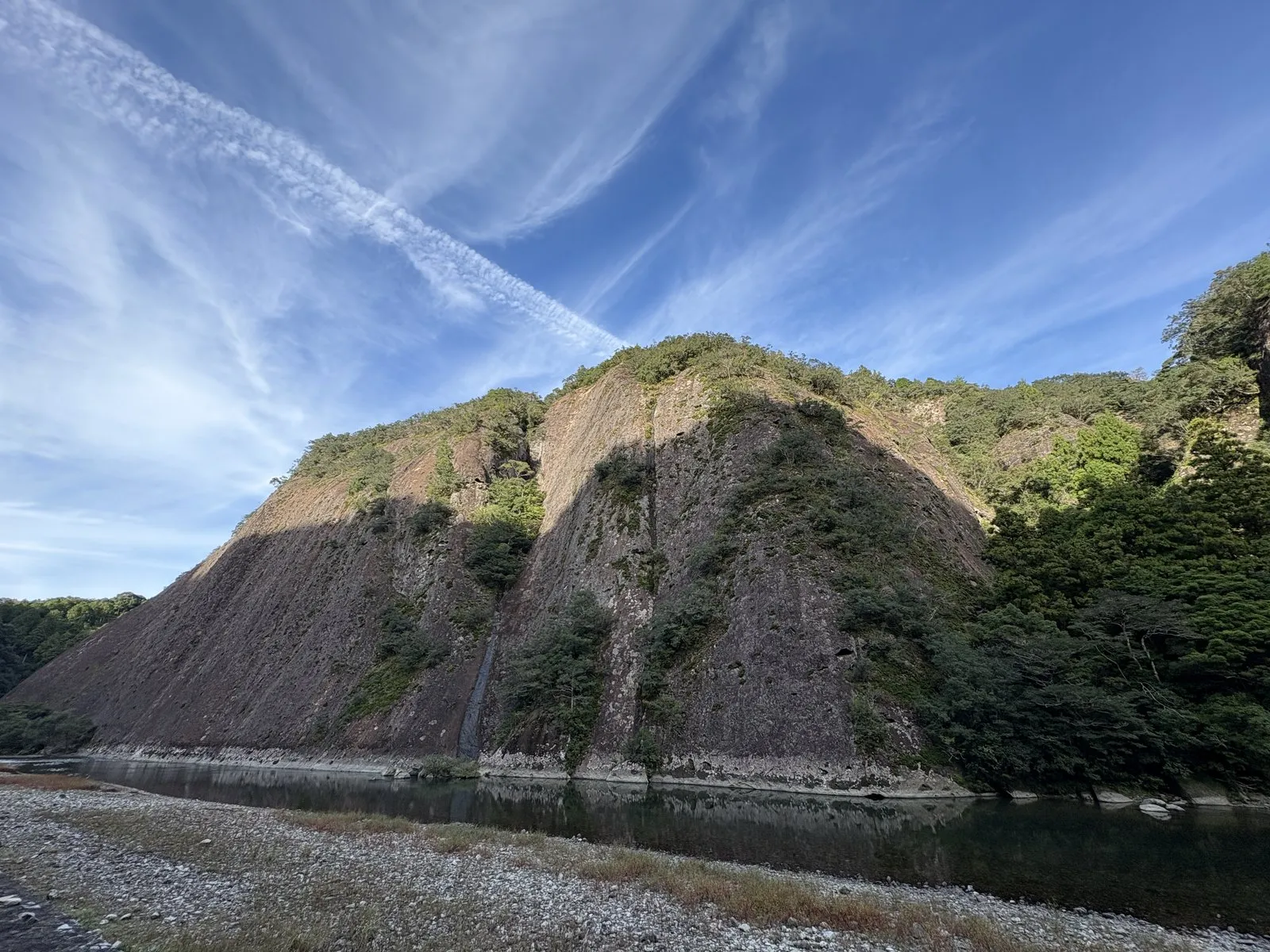
The entire opposite bank of the river is one single rock. Ichimaiiwa literally means “one-slab rock.”
Photos don’t capture what it’s like.
The sheer presence of it was so overwhelming that I nearly forgot to take pictures.
The river water was beautifully clear.
The current, though, was surprisingly fast.
The rock is about 100 m high and about 500 m wide.
It’s said to have been formed by volcanic activity, and it’s designated a national Natural Monument.
This was the best thing we saw that day.
It’s the kind of place you only really understand by going.
| Location | Ouse, Kozagawa, Higashimuro District, Wakayama |
| Parking | Use the roadside station's parking lot |
| Highlight | A single wall of rock towering over the far bank. National Natural Monument |
Mushikui-iwa — how did these holes get here?
After Ichimaiiwa, we pulled over in front of Botan-iwa, the “peony rock,” just long enough for a photo.
It’s a rock pitted all over with holes.
But even more riddled with holes was the rock at Michi-no-Eki Mushikui-iwa — the “insect-eaten rock.”
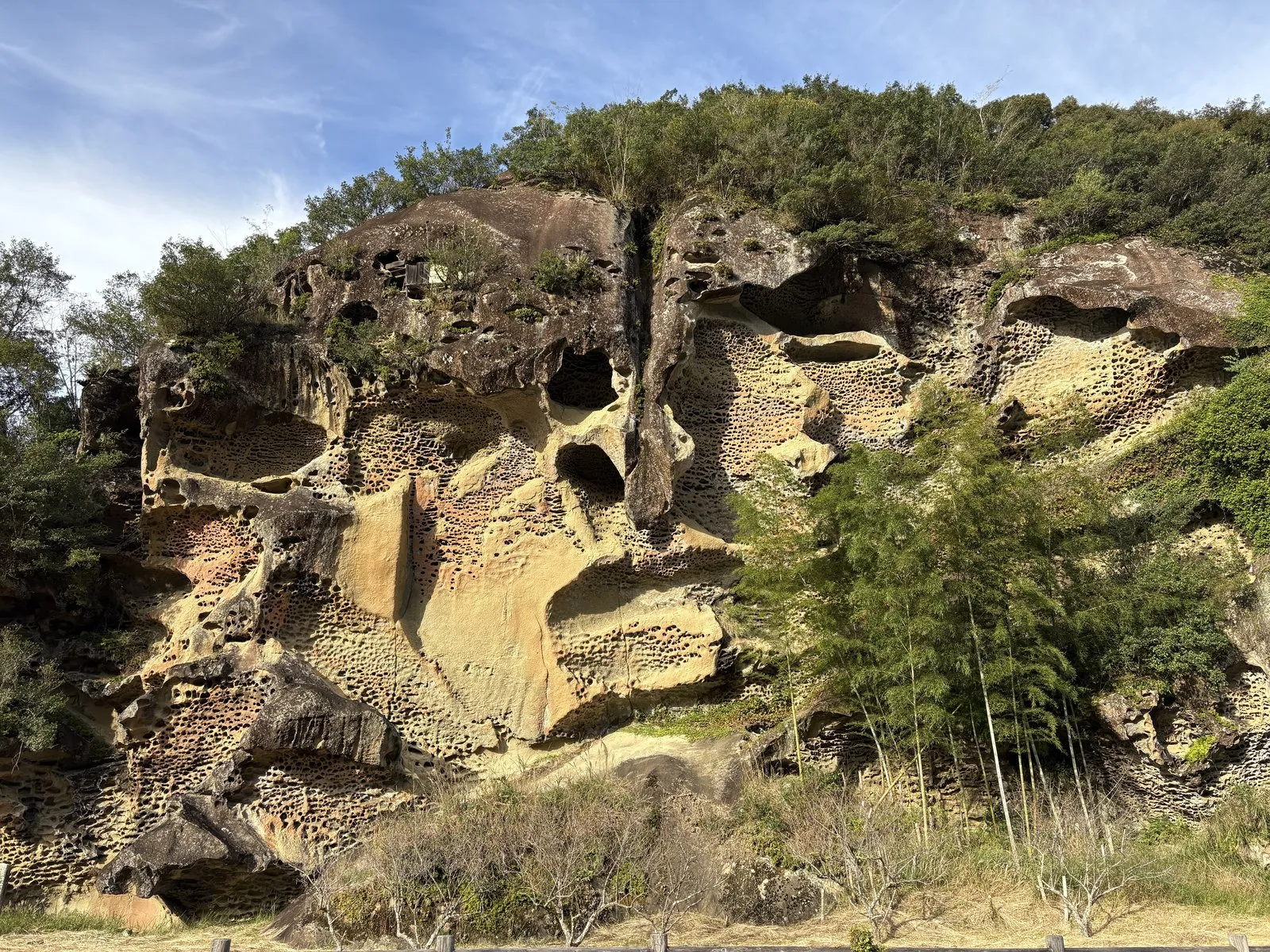
The scale is much more impressive in person than in photos.
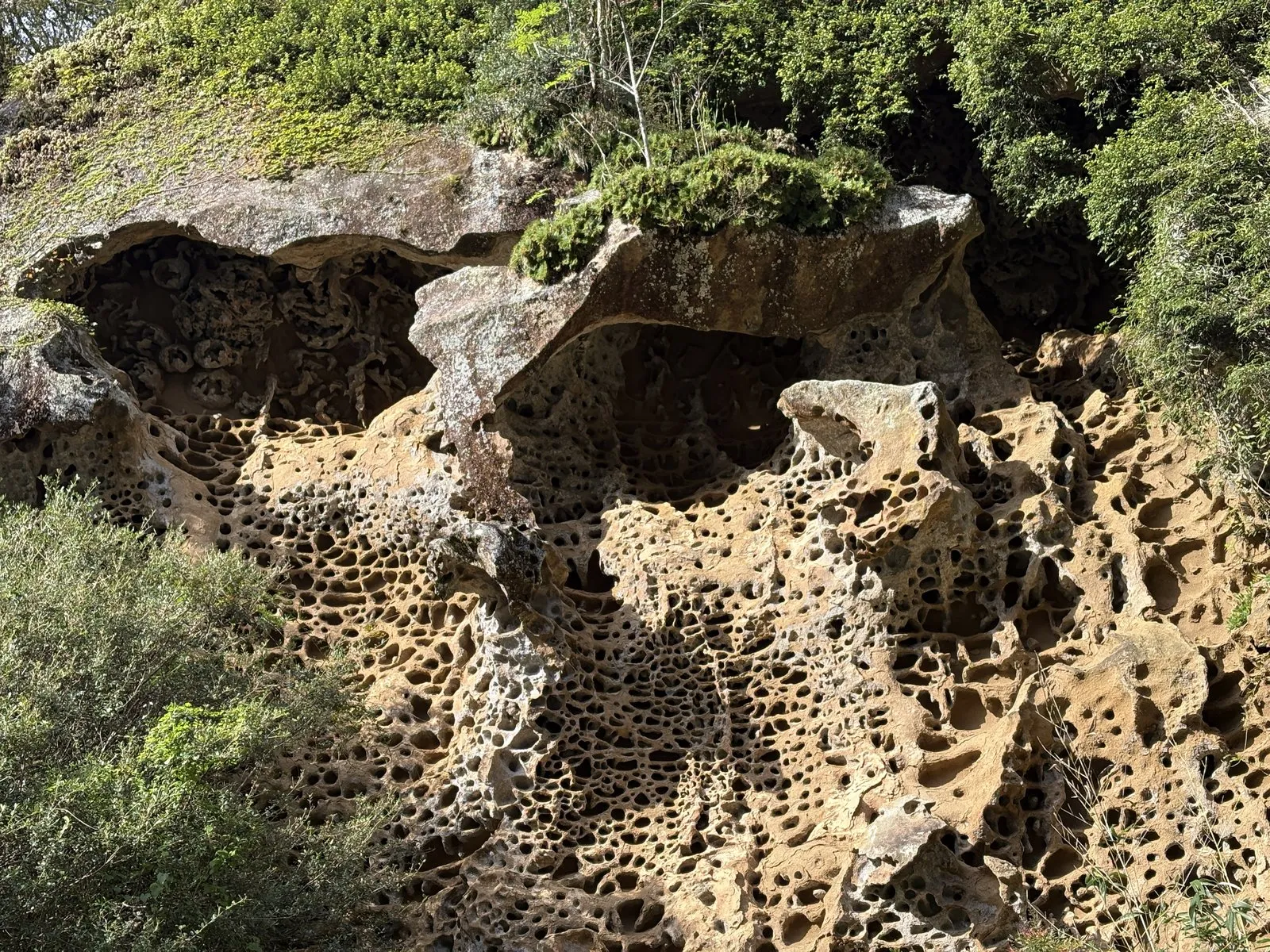
Up close, it looked like a honeycomb.
The holes are said to have formed as the rock’s surface weathered into a honeycomb pattern.
Hollows like these are called tafoni, and this rock is also a national Natural Monument.
Still, our shared verdict was that Ichimaiiwa had been the most impressive.
| Location | Ikenoyama, Kozagawa, Higashimuro District, Wakayama |
| Parking | Use the roadside station's parking lot |
| Highlight | A rock wall covered in honeycomb-like holes. National Natural Monument |
Kushimoto Shunsai Ohashi — striped jack and ume-fed sea bream
For dinner, we went to Kushimoto Shunsai Ohashi.
We got in ten minutes after opening, and people kept streaming in after us.
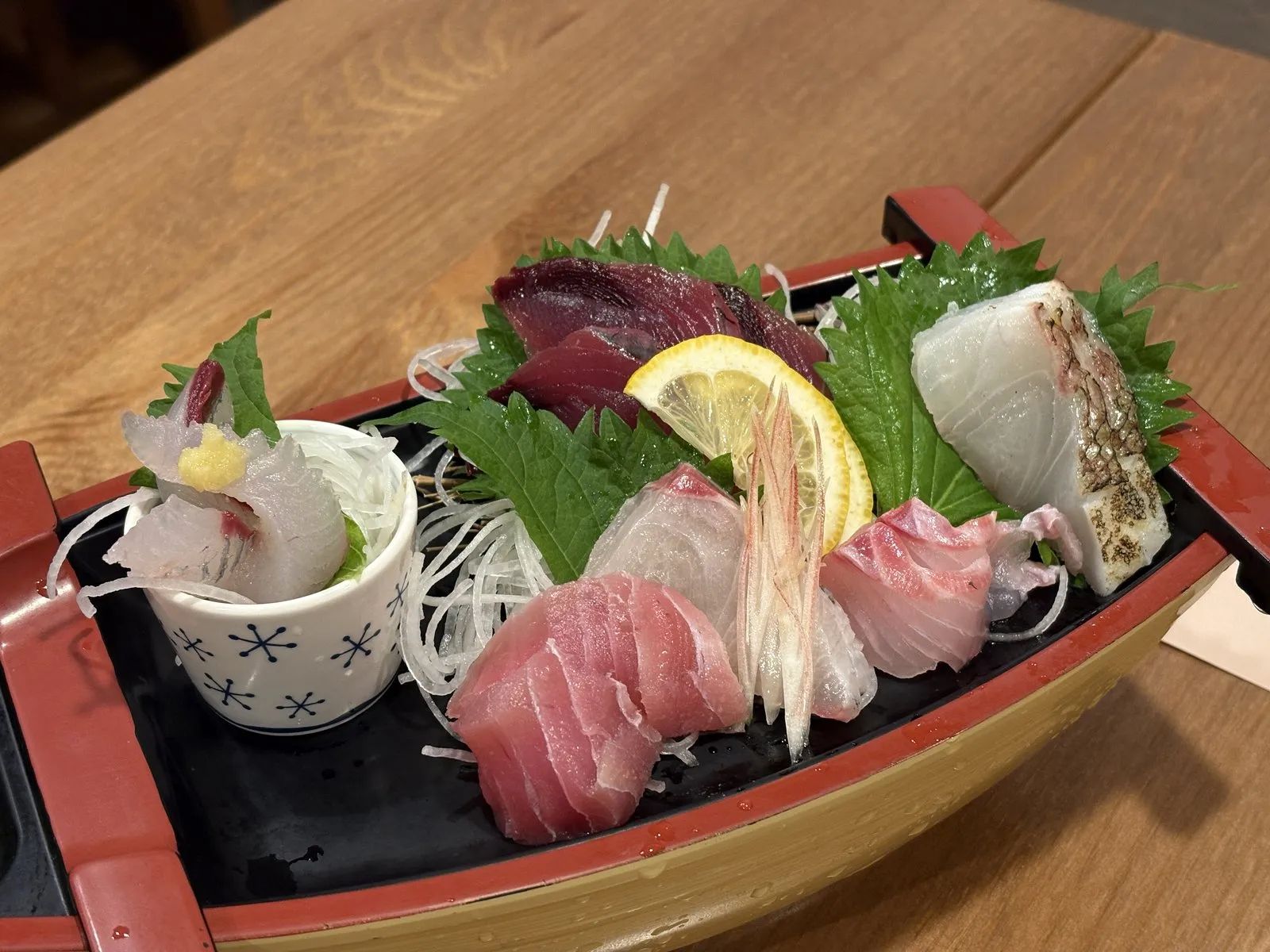
The day’s assorted sashimi (small), 1,800 yen.
Six kinds: flying fish, bonito, yellowfin tuna, striped jack (shima-aji), komekami, and ume madai, a Wakayama brand of farmed sea bream.
The flying fish was light.
The yellowfin was thick-cut and chewy, a little sinewy.
The komekami was pale pink with a pleasant crunch.
The standouts were the striped jack and the ume sea bream.
The striped jack had lovely fat and depth of flavor, yet still tasted clean.
The sea bream was lightly seared on the surface, firm-fleshed and full of flavor.
The Kushimoto mozuku seaweed (500 yen) was thick and substantial, and the vinegar dressing was good.
The fried and marinated ume sea bream (900 yen) was crisp outside and soft inside, with gently flavored vegetables.
But the sashimi was what really impressed us.
The red shiso and yuzu juice (500 yen) smelled of yuzu and tasted of shiso.
I’ve never liked shiso juice, but this one I could drink easily.
The grilled rice ball with yuzu miso (250 yen) was crackly on the outside, and my wife said she liked it.
Even so, this restaurant was a real find.
It’s not worth a trip on its own, but if you’re in Kushimoto, I’d recommend it.
| Location | Kushimoto, Kushimoto Town, Higashimuro District, Wakayama |
| What we ate | Assorted sashimi (small) 1,800 yen, Kushimoto mozuku 500 yen, fried and marinated ume sea bream 900 yen, and more (at the time of our visit) |
| Note | Seats filled up quickly right after opening. Arriving early is the safe bet |
Mercure Wakayama Kushimoto Resort & Spa — Hashigui-iwa at dawn, through the window
We stayed at the Mercure Wakayama Kushimoto Resort & Spa.
The hotel reopened under the Mercure brand in April 2024, and the rooms were pleasantly spacious.
In the lounge, we snacked on vegetable chips with café au lait and ginger ale.
The bitter melon (goya) chips had a bitter finish — an interesting flavor.
During the evening bar hours, I had an umeshu (plum liqueur) and soda.
The large communal bath was roomy and relaxing.
The Arida mandarin amazake (a sweet, non-alcoholic rice drink) after the bath was delicious.
And then, the next morning.
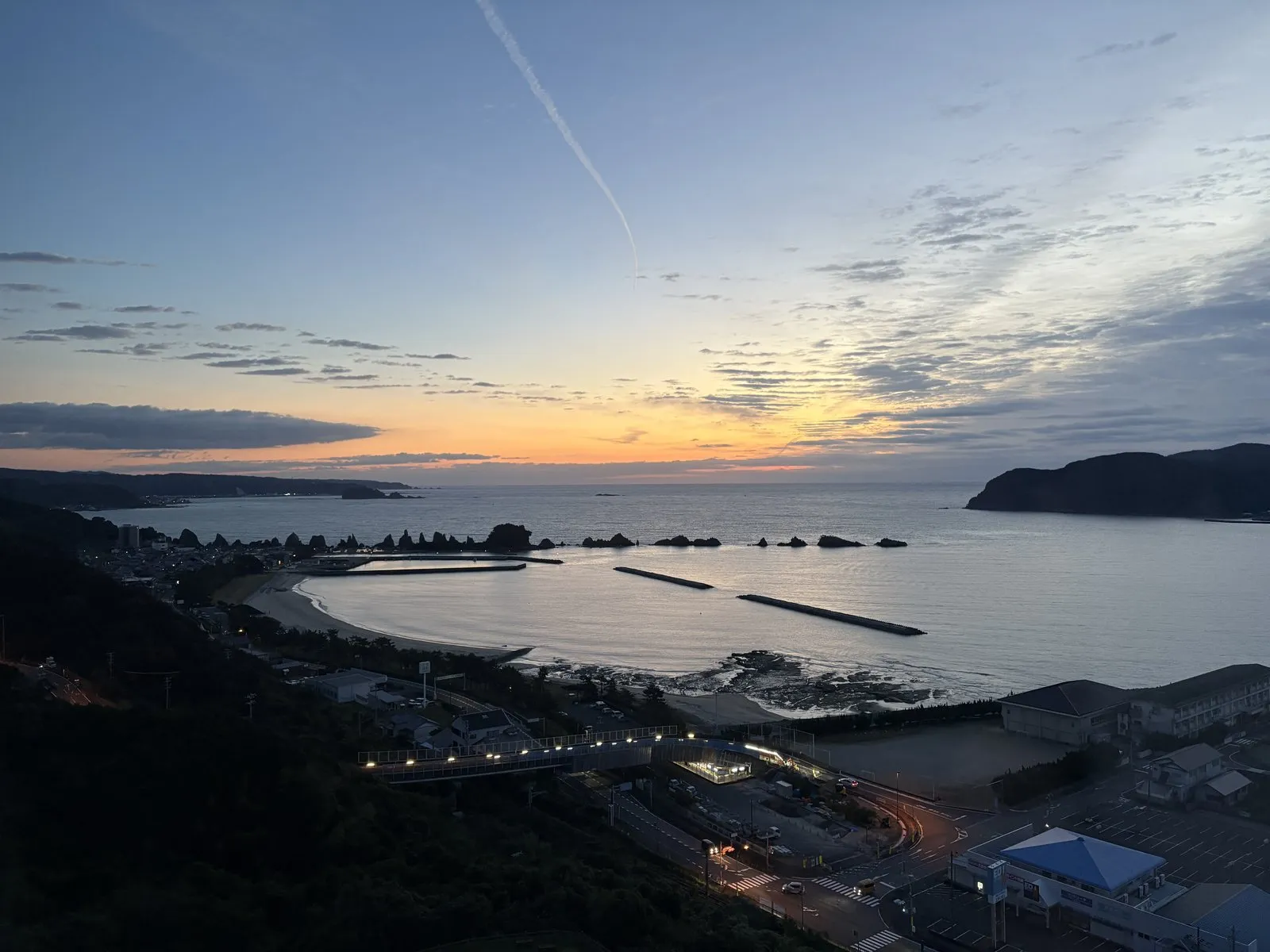
From our room’s window, we could see the sea and Hashigui-iwa.
The sea and the rocks in the early morning were stunning.
By five minutes before breakfast opened, there was already a line outside the dining room.
| Location | Sangodai, Kushimoto, Higashimuro District, Wakayama |
| What we liked | Spacious rooms with a window view of the sea and Hashigui-iwa. The lounge and large bath |
| Note | A line formed for breakfast before it opened |
Nachi Falls — you hear it long before you’re close
On day two, we headed to Nachi.
We parked at the Daimonzaka parking lot.
It’s free.
From there, we walked up Daimonzaka.
It’s a stone-paved slope on the Kumano Kodo pilgrimage route, lined with tall cedars.
We passed Kumano Nachi Taisha Shrine and the three-story pagoda of Seiganto-ji Temple, then on to Nachi Falls.
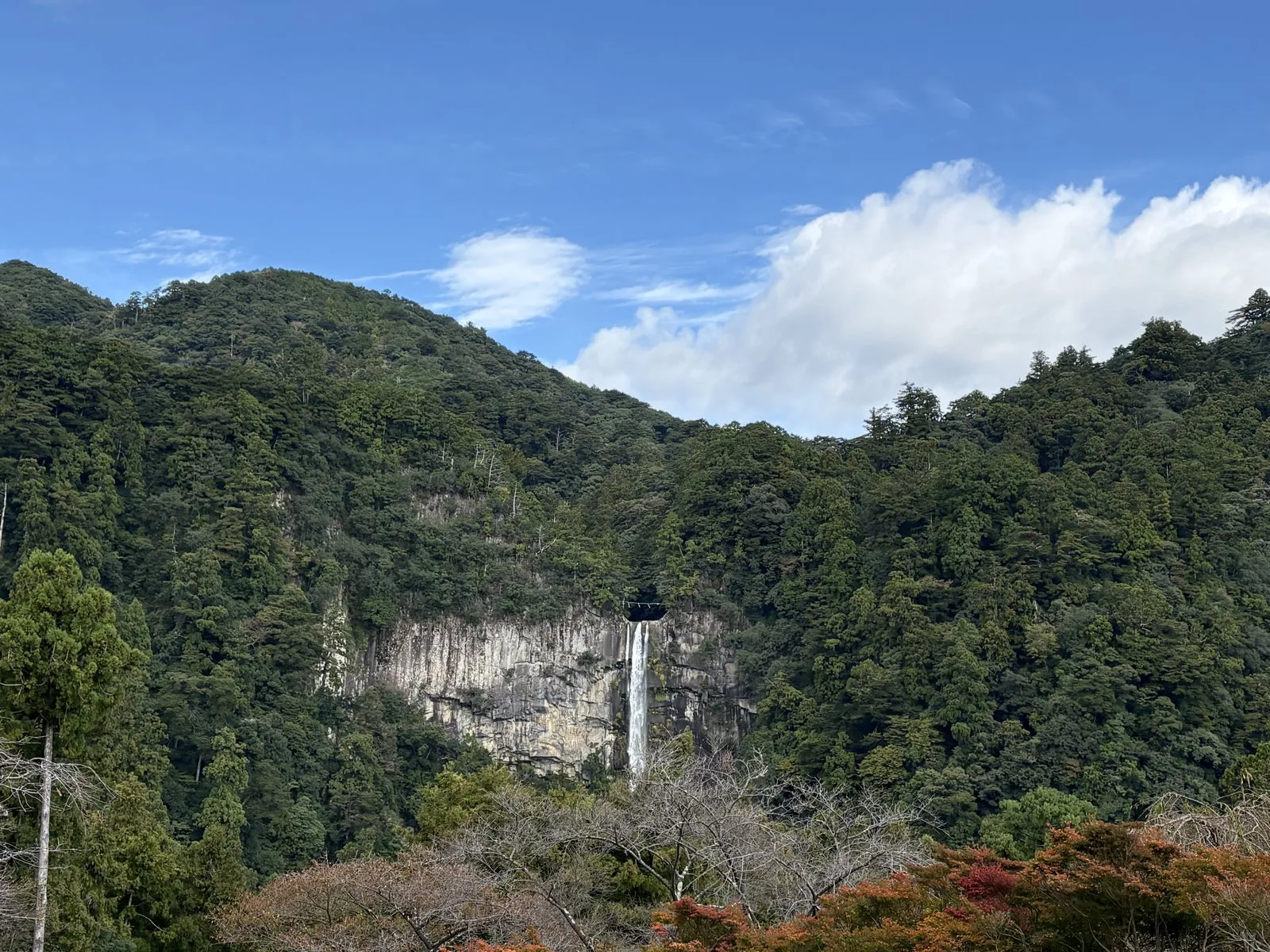
Even while we were still a good distance away, we could hear a tremendous roar.
The falls drop 133 m.
It’s said to be the tallest single-drop waterfall in Japan.
But I’ll be honest about how we felt.
You can’t get very close, and it felt very much like a tourist site.
I prefer waterfalls where you can walk right up to the plunge pool.
It’s certainly tall, but maybe the surroundings are just too open.
Even so, this waterfall came with one fascinating story.
The cliff that Nachi Falls drops down is said to be made of rock related to that volcanic activity.
And Hashigui-iwa, Kozagawa's Ichimaiiwa, and Mushikui-iwa, which we'd seen the day before, are all thought to be rocks tied to volcanic activity of that same era.
Pillar-like rocks lined up in the sea, a single slab you have to crane your neck to take in, a rock full of holes, and the cliff behind a waterfall.
They look nothing alike, but trace them back and they seem to lead to magma from the same period.
On the way back, we took the bus from in front of the falls down to Daimonzaka.
| Location | Nachisan, Nachikatsuura, Higashimuro District, Wakayama |
| Parking | Daimonzaka parking lot (free) |
| Getting around | Walk up the Daimonzaka stone path to Kumano Nachi Taisha, Seiganto-ji, and the falls. You can ride the bus from the falls back down to Daimonzaka |
Otaki mochi at Wakaya — mochi that’s actually mochi
On the way back from the falls, the smell of freshly grilled rice cakes drew us into a shop called Wakaya.
It turned out to be a winner.
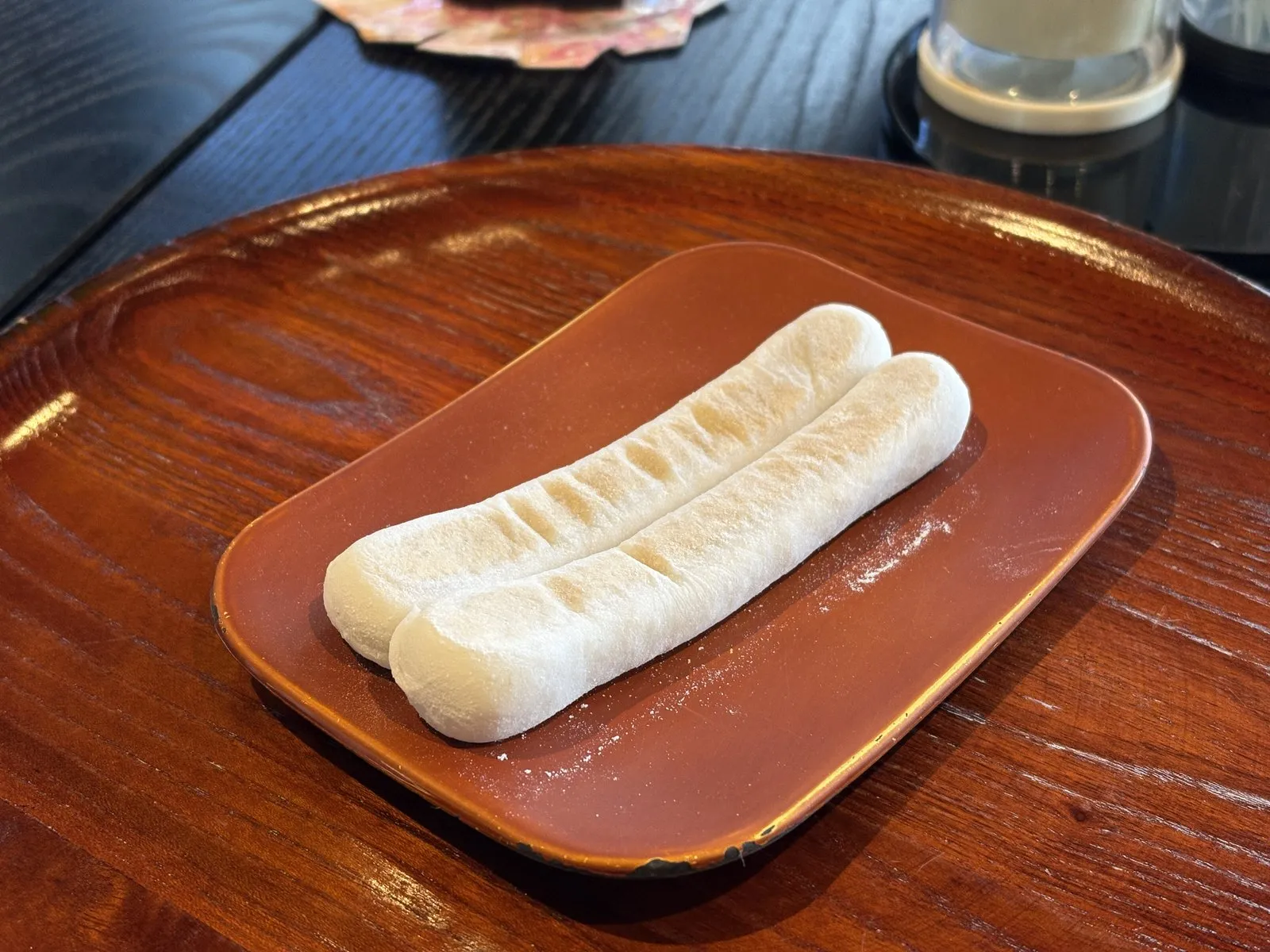
The Otaki mochi — “waterfall mochi” — comes out hot off the grill.
It isn’t dumpling dough or soft gyuhi. It’s proper, pounded mochi.
The red bean paste inside still had whole beans in it.
We bought some to take home for ourselves, too.
They’re individually wrapped and apparently keep for about a week.
Back home, I toasted them in the toaster oven, and they came out even better than at the shop.
Then I got greedy, put in more at once, and they exploded.
Lesson learned: do not overdo it.
By the time we finished eating, it was just about time for the bus.
| Location | Nachisan, Nachikatsuura, Higashimuro District, Wakayama |
| Signature | Freshly grilled Otaki mochi. Individually wrapped versions available to take home |
Gotobiki-iwa — a giant rock at the top of steep stone steps
From Nachi we drove to Shingu and stopped at Kamikura Shrine.
The shrine’s sacred object is a huge boulder called Gotobiki-iwa.
To reach it, you climb 538 stone steps, said to have been donated by Minamoto no Yoritomo, the 12th-century founder of the Kamakura shogunate.
They turned out to be rough rock steps on a steep slope.
The rock waiting at the top was simply huge.
And we were exhausted.
| Location | Kamikura, Shingu, Wakayama |
| Watch out for | The 538 stone steps are steep and rocky underfoot. Wear sturdy walking shoes |
Kuwanoki Falls — better than Nachi?
Our last stop was Kuwanoki Falls.
Even the river on the way there was beautiful.
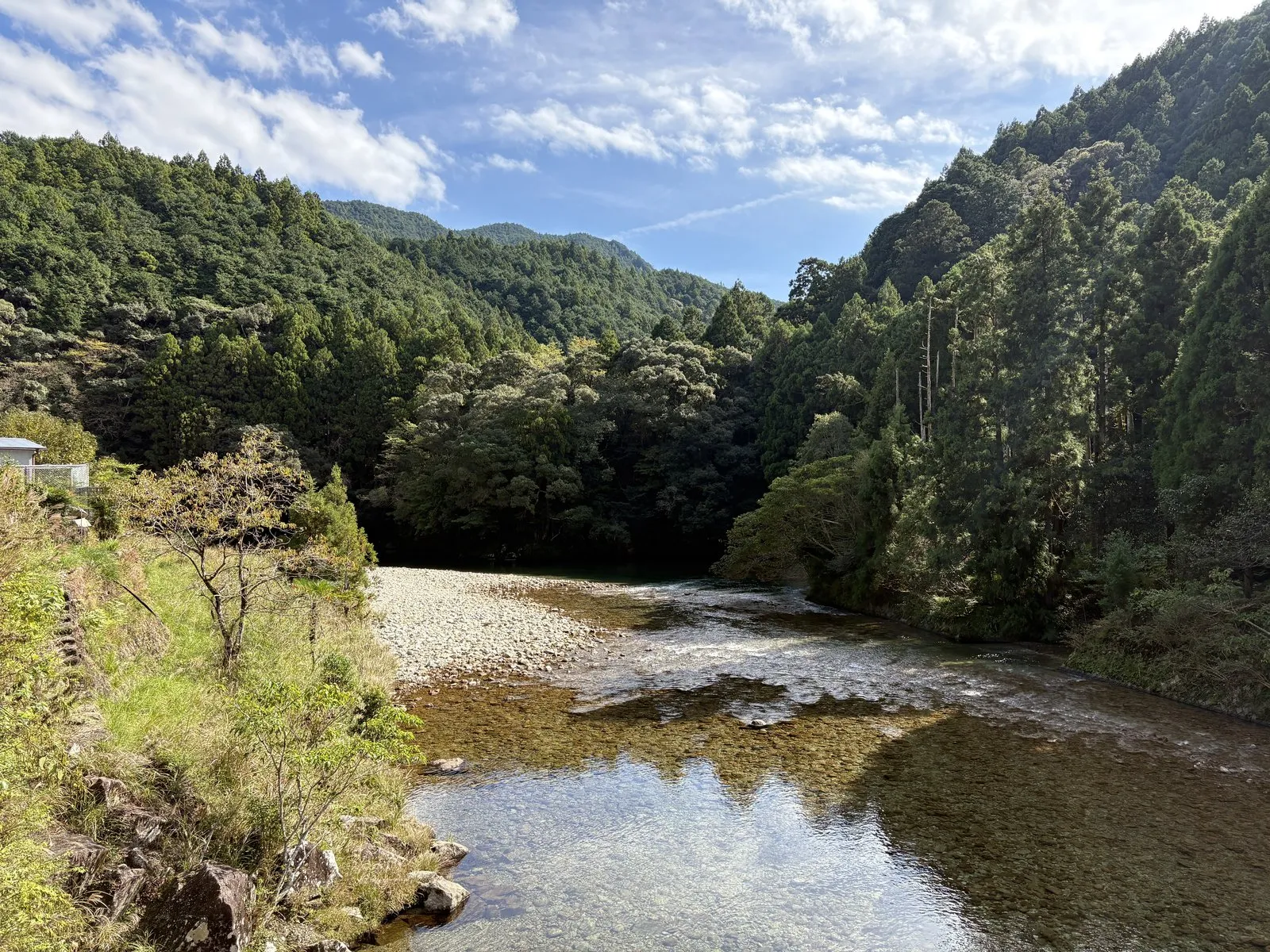
It was a clear, luminous blue, reminding us of “Niyodo Blue,” the famously transparent river in Kochi on Shikoku.
From there you walk, and the walk was quite tough.
At Nachi Falls, a bus takes you most of the way.
Here, your own legs are the only way in.
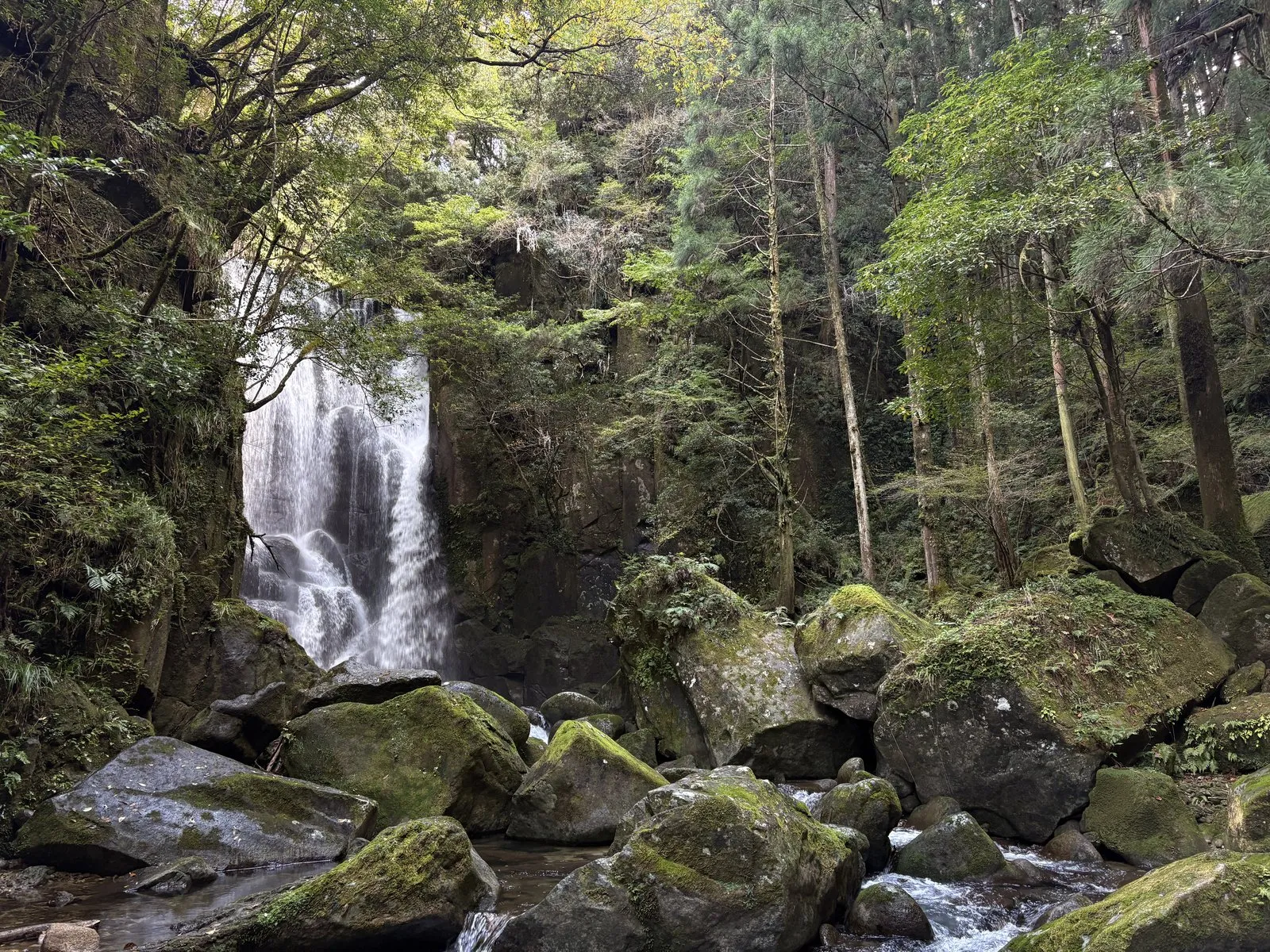
Beyond the moss-covered rocks, the falls came tumbling down.
The force of the water was incredible.
You can get close to the falls, and the atmosphere was wonderful.
The walk was hard work, but this was the one I liked best.
| Location | Ouga, Shingu, Wakayama |
| Highlight | The clear river along the way, and a powerful waterfall beyond moss-covered rocks |
| Watch out for | The walk to the falls is a real workout. Wear sturdy walking shoes |
Saury sushi for the train home
In front of Shingu Station, we bought sanma sugata-zushi — whole saury pressed onto sushi rice — from the station branch of Jofuku Sushi.
Head to tail, the entire fish.
It certainly makes a visual impression.
We ate it on the train home.
The saury was tasty, but the flavor was mild and the ratio leaned heavily toward rice.
Honestly, we’d have liked the fish a bit thicker.
We switched to an earlier train than planned and headed home.
Looking back, this trip started with a train grinding to a halt.
Even so, we managed to see a remarkable amount in two days.
On day one, I’d been thinking each stop felt a bit brief.
What changed that was Kozagawa’s Ichimaiiwa.
I can still clearly remember a rock so big I nearly forgot to take photos.
Kuwanoki Falls, which we had to walk to, stayed with me more than the famous Nachi Falls.
Rankings like that — the kind you only discover by going — were one of the rewards of this trip.
The fluffy tuna cutlet, the striped jack and ume sea bream, the hot-off-the-grill Otaki mochi.
As for the food, there were hits, and there were a few misses.
And then there was learning that the rocks lined up in the sea, the giant rock by the river, and the cliff behind the waterfall all seem to trace back to magma of the same age.
You can enjoy these views without knowing that. But once you know, remembering Hashigui-iwa at dawn feels a little different.
Rocks, waterfalls, and the sea — two days, thoroughly enjoyed.
Statements written as "is said to" or "is thought to" reflect prevailing interpretation and estimation rather than settled fact.